

Did you know over 60% of data breaches originate from unpatched software flaws? This startling fact underscores a harsh truth—cybersecurity begins with understanding potential weaknesses before adversaries exploit them.
You must proactively identify flaws in your systems, applications, and networks. Waiting for an attack is a losing strategy for protecting sensitive information.
Specialized software solutions systematically examine IT environments. They detect security gaps, misconfigurations, and other weaknesses that could lead to a catastrophic breach.
Organizations rely on this proactive approach to gain visibility into their digital assets. It ensures protection is an ongoing process, not a one-time event.
By systematically finding and fixing issues, your team can slash overall risk exposure. This is critical for maintaining a robust security posture and meeting compliance demands.
We will explore the most effective options to help you guard critical data. The right insight transforms your defense from reactive to resilient.
Emerging Trends in Vulnerability Scanning
The old way of finding security gaps is being replaced by dynamic, intelligent testing. Modern security practices demand more than just a checklist.
Dynamic vulnerability testing executes real-world attacks against live systems. This reveals flaws that only appear when an application is running.
As Rob Gurzeev, CEO of CyCognito, states, automated multi-faceted approaches are now essential. They identify critical issues based on actual business impact, not just theoretical weaknesses.
Organizations are adopting continuous monitoring to keep pace. Frequent software updates and new cloud deployments make the IT environment too dynamic for periodic checks alone.
The industry is shifting toward a strategic, risk-based management approach. It prioritizes threats based on their exploitability, transforming your cybersecurity posture from reactive to resilient.
Core Features and Capabilities of Vulnerability Scanning Tools
What separates a basic checker from a robust security solution? It’s the depth of its capabilities. Modern platforms offer a suite of features designed to automate complex tasks and provide clear, actionable intelligence.
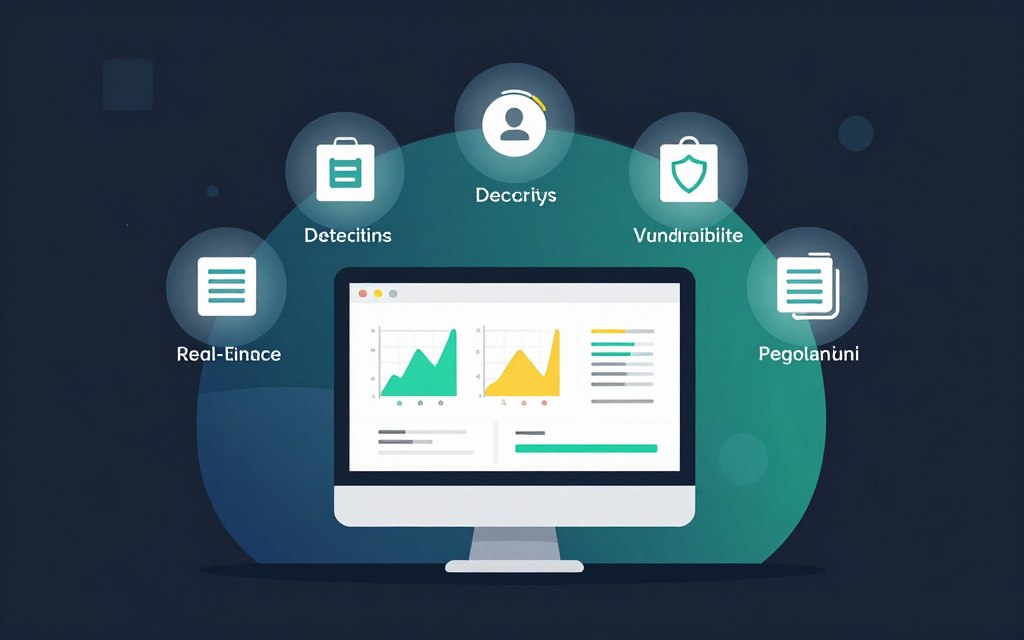
Automated Scanning for Efficiency
Automation is the engine of modern security. It allows your team to conduct regular checks without manual overhead. This boosts your operational efficiency dramatically.
Advanced software compares your system configurations against authoritative sources like the CISA KEV catalog. This ensures your defenses are aligned against the latest known exploited threats.
Detailed Reporting and Policy Compliance
Strong reporting is critical. It categorizes discovered flaws by severity and offers clear guidance. Your staff can then prioritize remediation efforts based on actual risk.
Policy compliance modules are equally vital. They help your organization adhere to strict standards like PCI DSS and HIPAA. This proactive approach demonstrates due diligence and helps avoid costly fines.
Finally, look for seamless integration capabilities. The best solutions connect with patch management and SIEM systems. This creates a unified, powerful ecosystem for your entire security posture.
Leveraging database vulnerability scanning tools for Data Protection
A generic security check often misses the critical flaws lurking in your information repositories. Effective data protection requires a specialized approach.
This focused assessment shields your most critical assets from evolving cyber threats.
Identifying Critical Database Weaknesses
Specialized scanners probe your backend systems for specific exposures. They hunt for weak passwords, unpatched software, and excessive user privileges.
This process prevents unauthorized data access. It also identifies flaws like SQL injection, a top OWASP threat.
By finding these issues, you ensure the integrity and confidentiality of your sensitive information.
Tailored Remediation Insights
These solutions provide actionable guidance for your development and operations teams. The reports offer clear steps to fix specific flaws.
Regular scans of your environment help maintain a strong security posture. You uncover misconfigurations before malicious actors can exploit them.
This visibility is essential for protecting your data infrastructure and managing risks proactively.
Diverse Scanning Solutions for Networks, Cloud, and Containers
Your infrastructure is no longer confined to a single server room—it spans across wired networks, virtual clouds, and portable containers. This complexity demands a layered defense strategy.
Generic checks miss critical gaps in these distinct environments. Specialized solutions provide the focused insight your teams need.
Network Scanners Uncovered
These solutions examine routers, switches, and firewalls. They pinpoint open ports and weak authentication protocols.
This process prevents lateral movement if a breach occurs. It is a fundamental layer for your overall security posture.
Cloud and Container Security Assessments
Cloud environment scanners address unique challenges. They assess IaaS, PaaS, and SaaS configurations against best practices.
Container scanners are essential for modern DevOps. They analyze dependencies and configuration files within Docker and Kubernetes environments.
This prevents the deployment of vulnerable applications. It identifies hidden vulnerabilities in images and runtime.
| Scanner Type | Primary Focus | Key Benefit |
|---|---|---|
| Network | Network devices & access points | Blocks internal threat movement |
| Cloud | IaaS, PaaS, SaaS configurations | Ensures compliance with cloud standards |
| Container | Docker images & Kubernetes pods | Secures the CI/CD pipeline |
Using these diverse approaches, your organization manages risks across the entire infrastructure. You gain comprehensive coverage that traditional methods overlook.
Product Roundup: In-Depth Evaluations of Leading Tools
A deep dive into leading platforms reveals distinct strengths tailored for different operational scales. The right fit balances raw power with practical integration into your daily workflow.
Nessus by Tenable offers a vast plugin library. It finds security gaps across diverse operating systems and applications. This makes it a staple for detailed technical assessment.
Qualys VMDR provides a scalable, cloud-based platform. It combines continuous asset discovery with intelligent threat prioritization. Large enterprises use it to manage their overall security posture effectively.
Rapid7 InsightVM emphasizes real-time risk visibility and analytics. It helps your teams prioritize remediation efforts based on potential business impact. Its integration with Metasploit enables dynamic testing.
OpenVAS is a powerful open-source scanner. It provides a cost-effective way for organizations to perform comprehensive checks. Your choice depends on internal expertise, budget, and required workflow features.
| Platform | Core Strength | Ideal For | UX & Integration Notes |
|---|---|---|---|
| Nessus | Comprehensive plugin library | Technical teams needing deep system scans | Extensive reporting; integrates with patch management systems |
| Qualys VMDR | Asset discovery & risk prioritization | Large enterprises managing diverse assets | Cloud-native; strong compliance reporting |
| Rapid7 InsightVM | Real-time security analytics | Teams prioritizing by business impact | Dynamic dashboards; ties into exploit frameworks |
| OpenVAS | Open-source scanning | Budget-conscious organizations with in-house skills | Community-supported; requires more manual configuration |
Each software solution addresses unique vulnerabilities and threats. Evaluate them against your specific security needs and infrastructure.
Strengthening Security Posture with Regular Vulnerability Assessments
The most robust security posture is built on a foundation of consistent, informed vigilance. Moving from occasional checks to a regular assessment strategy transforms your defense.
This shift creates a proactive stance, significantly shrinking your attack surface before incidents occur. Two core elements power this approach: an always-on monitoring process and current threat intelligence.
Continuous Monitoring and Updated Databases
Continuous monitoring acts as a persistent guard for your systems. It provides real-time alerts for new flaws and configuration changes.
Your software relies on updated vulnerability database feeds to identify emerging threats. Regular updates are crucial—they are the intelligence that keeps your controls effective.
Together, this cycle demonstrates due diligence for compliance and protects organizational assets. It empowers your teams with the insights needed for timely remediation and continuous improvement.
| Assessment Approach | Key Characteristic | Business Outcome |
|---|---|---|
| Reactive (Periodic) | Infrequent, scheduled scans | High blind spots; delayed response to new risks |
| Proactive (Continuous) | Ongoing monitoring & updated intelligence | Reduced attack surface; demonstrable security management |
This disciplined process ensures your organization adapts to new dangers, safeguarding sensitive data with a resilient, evolving defense.
Optimizing Remediation Workflows and Seamless Integrations
Modern security isn’t just about detection; it’s about orchestrating a rapid, coordinated fix across your entire tech stack. The gap between finding a flaw and closing it is where risk lives. Streamlined workflows bridge this gap, turning alerts into action.
Your remediation efforts must be fast and precise. Manual processes are too slow for today’s evolving threats. Automation is the key to scaling your response.
Automated Workflows for Faster Patching
Set up rules to auto-generate tickets in platforms like ServiceNow or Jira. This triggers immediate action based on flaw severity.
Your security and IT teams get clear tasks without delay. This slashes the time from detection to mitigation dramatically.
Integrating with SIEM and CMDB Systems
Connect your security software to a Configuration Management Database (CMDB). This ensures every asset is known and monitored, eliminating shadow IT.
As Rob Gurzeev of CyCognito notes, providing verifiable evidence for each issue streamlines communication between teams. Integration with SIEM systems correlates flaw data with live threat intelligence.
This enables faster, more informed patching decisions. Your overall security management becomes proactive and unified.
| Integration Type | Primary Function | Key Outcome |
|---|---|---|
| CMDB | Complete asset visibility & inventory | Eliminates assessment blind spots |
| SIEM | Correlates flaw data with threat feeds | Enables risk-based patching priorities |
| Ticketing (e.g., Jira) | Automates task creation & assignment | Accelerates the remediation process |
Optimizing these workflows creates a resilient defense. Your assets are protected through swift, coordinated action.
Securing Your Infrastructure for a Resilient Future
In an era of persistent cyber threats, your infrastructure’s strength is defined by its weakest link. Proactive security is not optional—it’s the foundation of a trustworthy operation.
Specialized tools are essential for this mission. They systematically find and fix vulnerabilities before they can be exploited. This builds a more resilient defense against modern threats.
The true value lies in consistent use. Integrate these solutions into your daily management and patch workflows. This creates a comprehensive shield for your entire infrastructure.
Organizations that commit to regular scanning safeguard their operations. They also maintain the critical trust of customers and partners.
Begin your journey toward a more secure future today. Make these powerful assessments a core part of your operational rhythm.