

Did you know a single data breach now costs companies an average of $4.44 million? That staggering figure from the latest industry reports underscores a critical reality.
Your most valuable digital assets face relentless, sophisticated cyber threats every day. Prioritizing a robust defense is no longer optional—it’s an urgent business imperative.
Effective encryption acts as your primary line of defense. It transforms readable plaintext into locked ciphertext, rendering sensitive information useless to unauthorized actors.
However, the protection is only as strong as the system guarding it. Mastering the full lifecycle of your cryptographic keys is what ensures true data integrity.
Without this control, you risk catastrophic security failures. This guide delivers the essential strategies you need.
You will learn how to implement, monitor, and maintain a secure environment for your enterprise information. Let’s build your defense.
Understanding the Fundamentals of Encryption and Key Management
At its core, protecting digital assets relies on two inseparable concepts: scrambling the data and controlling the secret code.
What is Data Encryption and How It Works
Data encryption functions by applying a complex mathematical recipe to your plain text. This process transforms readable information into a locked, unreadable format called ciphertext.
Algorithms like the Advanced Encryption Standard (AES) are the industry-standard recipes for this. They ensure your sensitive material remains secure against unauthorized access and tampering.
Role of Cryptographic Keys in Safeguarding Data
Think of cryptographic keys as the unique digital combination to a safe. They are the essential secret that determines who can successfully encrypt decrypt data within your systems.
Without the correct key, even the most sophisticated algorithm is useless. The strength and secrecy of these codes are the bedrock of your entire security posture.
| Type | How It Works | Common Use | Key Consideration |
|---|---|---|---|
| Symmetric Encryption | Uses a single, shared secret key to both lock and unlock information. | Securing files and databases where speed is crucial. | Key distribution must be extremely secure. |
| Asymmetric Encryption | Uses a paired public key and a private key. One locks, the other opens. | Secure communications like SSL/TLS for websites. | Eliminates the need to share a secret key directly. |
You must understand that governing these secrets is a continuous process. For a broader strategy, review our guide on foundational database best practices to build a secure environment from the ground up.
The Importance of Robust Key Management for Data Security
Recent high-profile incidents prove that losing control of cryptographic assets can lead to devastating breaches. A strong cipher is useless without an equally strong system to govern its secret codes. In fact, the IBM Cost of a Data Breach report shows that using encryption can slash the financial impact of an incident by over $200,000.
Risks of Compromised or Mismanaged Keys
Consider the Microsoft incident. A state-sponsored group stole a critical signing key. This allowed them to forge access tokens for services like Outlook. It’s a stark reminder of the danger.
When your secret codes are poorly handled, your entire protection system fails. Unauthorized users can easily unlock sensitive information. Your organization faces a constant threat of catastrophic data loss.
Therefore, safeguarding your digital secrets is the most critical action you can take. It ensures your confidential material stays secure, both at rest and in transit.
Decoding the Encryption Key Lifecycle
A truly secure system doesn’t just create strong codes; it governs their entire journey from birth to retirement. This end-to-end process is called the key lifecycle. Mastering it prevents dangerous gaps in your data protection strategy.
Key Generation: Secure Algorithms and Randomness
It all starts with creating a powerful secret. You must use certified hardware security modules. These tools meet standards like FIPS 140-2 for top-tier security.
Inside them, high-quality random number generators produce unpredictable codes. This randomness stops attackers from guessing your secrets. It’s the foundation of trust for your entire encryption system.
Storage, Distribution, and Usage of Encryption Keys
Once created, these digital assets need a fortress. Secure storage keeps them safe from both external hackers and internal mistakes.
Proper distribution ensures only authorized systems get access. Finally, controlling how and when secrets are used is critical. This strict oversight helps you mitigate risk from accidental exposure.
Every phase of this lifecycle demands careful control. Your vigilance across all stages ensures your information remains locked tight.
Best Practices for Effective Encryption Key Management
The difference between adequate protection and ironclad security lies in the systematic execution of proven operational standards. These best practices form your essential playbook.
Your first critical rule is separation of duties. Divide control of your cryptographic infrastructure across different teams. This limits insider threat and ensures no single group holds total power.
Never embed your encryption keys directly into application code. Hard-coded secrets are low-hanging fruit for attackers. Instead, use secure, dedicated services for handling these vital assets.
Regular audits of access policies are non-negotiable. You must verify that only authorized personnel can perform sensitive operations. Establishing clear internal practices reduces human error across the entire lifecycle.
Finally, always mandate robust, industry-standard algorithms. This ensures your security posture withstands modern brute-force attacks. Consistency in these actions builds a resilient defense system.
How to Implement Database Encryption Key Management
To lock down your sensitive information, you must deploy systematic controls and automated workflows. A practical implementation focuses on two critical pillars: removing human error from routine tasks and enforcing strict, visible governance over who can do what.
Automating Key Rotation for Consistency
Manual processes are prone to mistakes and delays. Automated systems handle the rotation of your cryptographic assets on a strict, predefined schedule.
This consistency is a security game-changer. It minimizes human error and ensures your policies are enforced across all platforms without fail.
If a specific secret is ever compromised, the automated cycle limits the potential damage. The exposure window remains very small because old codes are quickly retired.
Role-Based Access and Audit Trail Strategies
Not everyone in your organization needs the same level of power. Role-based access control restricts the usage of vital assets to specific, authorized individuals.
This strategy significantly reduces the potential for unauthorized data viewing or tampering. It’s a fundamental layer of your defense.
Pair this with a comprehensive audit trail. This log provides you with the visibility needed to track every action—who accessed what and when it occurred.
Together, these strategies ensure compliance with internal policies. They also reduce the administrative burden on your IT teams, letting automation handle the heavy lifting.
Managing Keys in Cloud and Hybrid Environments
Migrating to the cloud doesn’t mean surrendering control of your most critical digital secrets. Your security perimeter now extends into the virtual infrastructure of third-party providers. This shift demands a new approach to governing access.
Cloud Key Management Solutions and BYOK Options
Major platforms offer built-in tools for handling your encryption keys. For instance, Salesforce Platform Encryption for Data Cloud lets businesses manage customer-managed keys directly within their interface.
This is a game-changer. You maintain greater control over your security policies while using third-party services. Bring-your-own-key options are central to this model.
BYOK allows you to retain ownership of your cryptographic assets. You can generate and store them in your own secure hardware, then import them into the cloud. This balances convenience with sovereignty.
Integrating On-Premises and Cloud Infrastructure
Many organizations operate hybrid setups. Integrating legacy hardware with cloud systems requires a unified strategy. Your protective posture must remain consistent everywhere.
Carefully evaluate the measures your cloud provider offers. Ensure they meet your specific compliance needs. Centralizing control across all environments is essential.
It gives you complete visibility over the encryption keys guarding your sensitive information. You can enforce policies uniformly, closing dangerous gaps.
The Role of Hardware Security in Protecting Encryption Keys
Your sensitive information requires more than digital locks; it demands the impenetrable physical barrier of certified security modules. This is where hardware security modules become essential for high-stakes applications like financial systems.
HSMs create a tamper-resistant fortress for your most critical digital secrets. They physically isolate cryptographic operations from general-purpose servers where vulnerabilities often exist.
When compliance standards mandate absolute control, dedicated hardware is non-negotiable. It provides an offline layer of protection that effectively counters remote network-based attacks.
You must weigh the investment against the operational benefits. Complete localized control over your sensitive storage often justifies the cost for organizations handling highly confidential data.
| Feature | Hardware Security Module | Cloud-Based Storage |
|---|---|---|
| Physical Security | Tamper-resistant hardware with certified protection | Virtual security controls managed by provider |
| Network Attack Resistance | High – operates offline or air-gapped | Variable – depends on cloud security posture |
| Compliance Control | Full organizational oversight and audit capability | Shared responsibility model with provider |
| Operational Cost | Higher upfront investment, predictable ongoing | Lower initial cost, variable operational expenses |
Robust hardware security ensures your encryption keys remain protected against both external threats and internal system vulnerabilities. This approach delivers peace of mind for your most valuable assets.
Mitigating Risks with Timely Key Rotation and Revocation
The most overlooked step in data protection isn’t creating secrets, but knowing how and when to retire them. Proactive key rotation and revocation are your frontline defense against lingering risk.

This disciplined process limits the damage window if a secret is ever exposed. It ensures outdated credentials can’t be used against you.
When and How to Rotate Encryption Keys
You should refresh your encryption keys on a strict schedule. Time-based cycles—like every 90 days—are common. Event-based triggers, such as a staff departure, are also critical.
The rotation process itself is straightforward. First, generate a new secret. Then, re-encrypt your sensitive data with it. Finally, retire the old credential from active use.
Automation is essential here. It enforces consistency and eliminates human error from this vital security task.
Securely Revoking and Destroying Legacy Keys
Retirement isn’t complete until a legacy secret is permanently destroyed. Simply marking it as inactive isn’t enough. You must securely delete it to prevent any recovery.
This final step neutralizes the risk of unauthorized users accessing old data. Use cryptographic shredding or dedicated hardware commands. It ensures those old keys are gone for good.
Compliance and Regulatory Considerations in Key Management
Fines for non-compliance can reach crippling levels. Adherence to data security standards is now a financial imperative.
For example, GDPR violations may cost your organization up to €20 million. That’s 4% of your global annual revenue.
You must prove your key management practices align with frameworks like NIST. Auditors demand this for customer trust.
Detailed logs are non-negotiable. They show your encryption keys are handled by strict protocols.
Failure brings severe penalties. Your company’s reputation faces global market damage.
| Regulation | Key Management Requirement | Audit Log Mandate | Maximum Penalty |
|---|---|---|---|
| GDPR | Data protection by design and default | Detailed activity records required | €20M or 4% global revenue |
| HIPAA | Safeguards for Protected Health Information (PHI) | Audit controls for access tracking | $1.5M per violation tier |
| PCI DSS | Strong cryptographic controls for cardholder data | Log all access to critical systems | $100k per month non-compliance |
A robust strategy helps you navigate this complex landscape. It ensures your data stays protected against unauthorized access while meeting all compliance obligations.
Leveraging Key Management in Modern DevOps and IoT Security
Imagine a smart thermostat becoming the weak link that exposes your entire corporate network. Modern development and connected devices demand a new approach to safeguarding digital secrets.
Secrets Management in Rapid Development Cycles
Your DevOps teams deploy code constantly. Specialized tools are essential for storing API credentials and other sensitive assets securely.
These solutions automate the handling of credentials across your infrastructure. They integrate with your central key management systems to reduce human error.
This protects your security posture during fast-paced development cycles. It ensures only authorized systems have access.
Securing IoT Devices with Appropriate Key Controls
Internet-connected devices like cameras and sensors often have weak default protection. You must implement strong controls for authentication.
Use efficient cryptographic methods that don’t overload limited device power. Enforce strict access controls on your IoT network.
This prevents attackers from using a compromised gadget to breach your core systems. Proper governance of these encryption keys is non-negotiable for overall defense.
Integrating Key Management with Emerging Technologies
What happens when the very math that secures your information today becomes obsolete tomorrow? Your defensive strategy must evolve. Integrating next-generation tools is no longer optional for long-term protection.
You need to future-proof your governance of digital secrets. This means preparing for quantum computers and using smart analytics.
Quantum Computing Threats and Quantum-Resistant Methods
Quantum machines threaten to break current encryption standards. Their immense power could crack codes in hours, not years.
Experts are already investing in new, quantum-resistant algorithms. Your goal is to keep sensitive data secure for the next decade and beyond.
Using AI and Analytics for Enhanced Key Security
Artificial intelligence monitors your security systems for unusual patterns. It can spot a potential breach in your credential usage that humans might miss.
This proactive approach lets you strengthen defenses before attackers strike. You automate complex threat detection, saving staff significant effort.
Adopting AI-driven security gives you a powerful advantage. It ensures your organization stays resilient against both current and future attack methods.
Tools and Technologies Driving Advanced Key Management Solutions
The evolution of key management technologies offers you powerful options. Selecting the optimal mix demands careful evaluation of your specific needs.
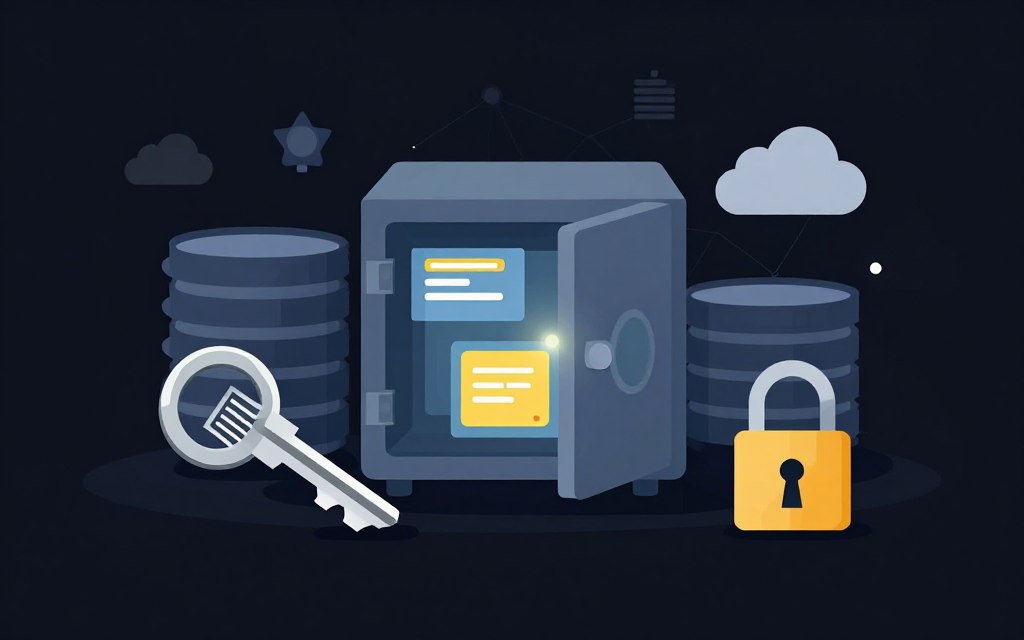
Your choice directly impacts operational resilience and compliance posture. Let’s compare the leading solutions available today.
Comparing Hardware Security Modules and Key Management Services
You must decide between dedicated hardware and cloud-based services. This choice balances control, scalability, and cost for your organization.
| Feature | Hardware Security Module (HSM) | Cloud Key Management Service (KMS) |
|---|---|---|
| Control & Sovereignty | Full physical control on-premises | Managed service with shared responsibility |
| Scalability | Requires hardware procurement | Elastic, scales with cloud usage |
| Compliance Suitability | Ideal for strict regulatory mandates | Best for dynamic, cloud-native architectures |
| Initial Investment | Higher upfront capital expenditure | Lower initial cost, operational expense model |
Open-Source Versus Proprietary Key Management Tools
Another critical decision is between open-source and proprietary software. The Key Management Interoperability Protocol (KMIP) helps different systems communicate.
- Open-Source Tools: Offer high flexibility and transparency for custom environments. You can audit the code yourself.
- Proprietary Solutions: Provide easier integration and dedicated support for enterprise hardware and systems.
- Interoperability Focus: KMIP allows disparate tools to work together, ensuring a consistent security posture.
- Avoiding Lock-in: Open-source promotes vendor independence, while proprietary options may create dependency.
Evaluate each tool’s features to support automated lifecycle processes. The right blend protects your encryption keys and maintains operational efficiency.
Securing Your Future with Expert Encryption Key Management Strategies
Securing your organization’s future means treating your cryptographic secrets as your most prized possessions. Mastering key management is a continuous process. You must stay vigilant against evolving threats and changing regulatory requirements.
Prioritize the security of your digital assets. This ensures sensitive data remains protected throughout its entire lifecycle. Implement the best practices outlined here.
You will build a resilient infrastructure that supports long-term growth. Remember, your defensive strategy is only as strong as its weakest link.
Take the next step today. Audit your current systems and invest in advanced tools. For foundational knowledge, consider a guide to learn encryption techniques for databases.
Now, strengthen your posture and secure your digital future.