

Did you know malware exploiting software vulnerabilities spiked 151% in just one quarter? This surge happened back in 2018, and the digital landscape has only grown more hostile since.
By 2021, the annual cost of cyber-crime was estimated at a staggering $6 trillion. That number makes one thing clear: a reactive security stance is a recipe for disaster.
Your organization’s most valuable asset—its data—lives in a complex infrastructure. Attackers constantly probe for weaknesses to compromise sensitive information or disrupt critical system operations.
You need a proactive approach to stop them before they breach your defenses. This is where modern threat modeling becomes your most powerful shield.
We will explore how this structured process helps you identify vulnerabilities early. It transforms your security posture from fragile to resilient against evolving digital threats.
Implementing these strategies isn’t just about technology. It’s about effectively safeguarding your data and maintaining the hard-earned trust of your users.
Understanding the Fundamentals of Threat Modeling
What if you could map out every potential path a hacker might take to compromise your data? This is the power of a proactive security approach known as threat modeling.
It starts by creating a simplified model, or abstraction, of your entire system. You then build profiles of likely attackers and their specific goals. You see your weaknesses through their eyes.
This process helps you catalog possible threats long before they become real incidents. By analyzing your architecture early, you make smarter design choices. These choices shrink your attack surface dramatically.
Effective threat modeling is not a one-time task. It’s a continuous cycle that evolves with your technology and new risks. This keeps your security measures relevant and strong.
Mastering these fundamentals gives you a decisive advantage. You learn to anticipate how a threat might unfold. This foresight lets you build defenses where they matter most.
Visualizing Data Flows with Effective Diagrams
Without a roadmap of your data’s travel, you’re defending blind against potential intrusions. Effective visualization turns complex data flows into clear, actionable insights. You must see how information moves to protect it properly.
Mapping Data Flows for Clear Security Insights
Data flow diagrams (DFDs) are a type of flow diagram that maps every entity, event, and system boundary. They show you where information enters, transforms, and rests. This clarity spots where unauthorized access could occur.
By documenting each movement, you create a blueprint for your team. It simplifies auditing controls and uncovering hidden risks. These visual tools make complex paths easy to understand.
Defining Trust Boundaries Within Your System
Trust boundaries separate high-risk zones from secure areas. They isolate sensitive components like your core data stores. A breach in one zone won’t compromise your entire infrastructure.
Defining these limits is a core step in security modeling. It ensures your defenses align with actual data sensitivity. You build stronger perimeters around what matters most.
| Diagram Element | Role in Security Analysis | Key Question |
|---|---|---|
| External Entity | Source or destination of data | Is this entity authenticated? |
| Process | Transforms or handles data | Could this process be tampered with? |
| Data Store | Holds information at rest | Is access to this store properly restricted? |
| Data Flow | Path data travels between elements | Is this flow encrypted and monitored? |
| Trust Boundary | Demarcates zones of different trust levels | Does crossing this boundary require validation? |
Leveraging STRIDE to Uncover Vulnerabilities
A framework developed over two decades ago still provides the backbone for modern security analysis. Invented in 1999 and adopted by Microsoft in 2002, STRIDE offers a mature, structured checklist. It transforms a vague sense of risk into a clear, actionable catalog of weaknesses.
Examining Spoofing, Tampering, and Elevation of Privilege
You use this method to systematically examine critical categories. Spoofing attacks fake user identity. Tampering involves unauthorized data modification. Elevation of privilege grants users access they shouldn’t have.
This acronym helps you categorize every potential threat in your system. It ensures you don’t overlook common attack vectors. Your security analysis becomes comprehensive and repeatable.
Applying STRIDE to your design gives you a powerful lens. You evaluate how an attacker might exploit authentication flaws. You see where authorization mechanisms could fail.
This framework forces you to think like an adversary. That clarity lets you implement robust controls. You can neutralize identified threats before they cause harm.
Applying PASTA for a Business-Focused Security Strategy
How do you align your security investments with the actual business risks your organization faces? The Process for Attack Simulation and Threat Analysis (PASTA) provides the answer. Developed in 2012, this risk-centric framework shifts the focus from purely technical flaws to business impact.
PASTA elevates your security posture by involving decision-makers from across your company. This collaborative process ensures your defenses support core organizational goals.
Identifying Key Stages in Attack Simulation
The seven-stage methodology simulates how an attacker would target your assets. You gain a deeper understanding of each threat scenario. This allows for precise, cost-effective mitigation strategies.
| Stage | Primary Focus | Business Outcome |
|---|---|---|
| 1. Define Objectives | Scope and business impact | Aligns analysis with critical assets |
| 2. Define Technical Scope | Applications, data flows, and infrastructure | Creates a clear system boundary |
| 3. Decompose Application | Identify trust boundaries and components | Reveals architectural weak points |
| 4. Analyze Threats | Use libraries like STRIDE | Catalogs potential attack vectors |
| 5. Vulnerability Analysis | Map threats to existing weaknesses | Highlights exploitable gaps |
| 6. Attack Modeling | Simulate attacker steps and scenarios | Quantifies likelihood and impact |
| 7. Risk Analysis & Management | Prioritize based on business impact | Directs resources to top risks |
This structured modeling approach turns security into a strategic, business-led function. You stop guessing and start defending with confidence.
Utilizing DREAD to Prioritize Security Risks
Microsoft’s DREAD framework cuts through the noise, giving you a clear formula to rank dangers. It transforms a messy list of issues into a structured security action plan. You stop guessing and start fixing what matters most.
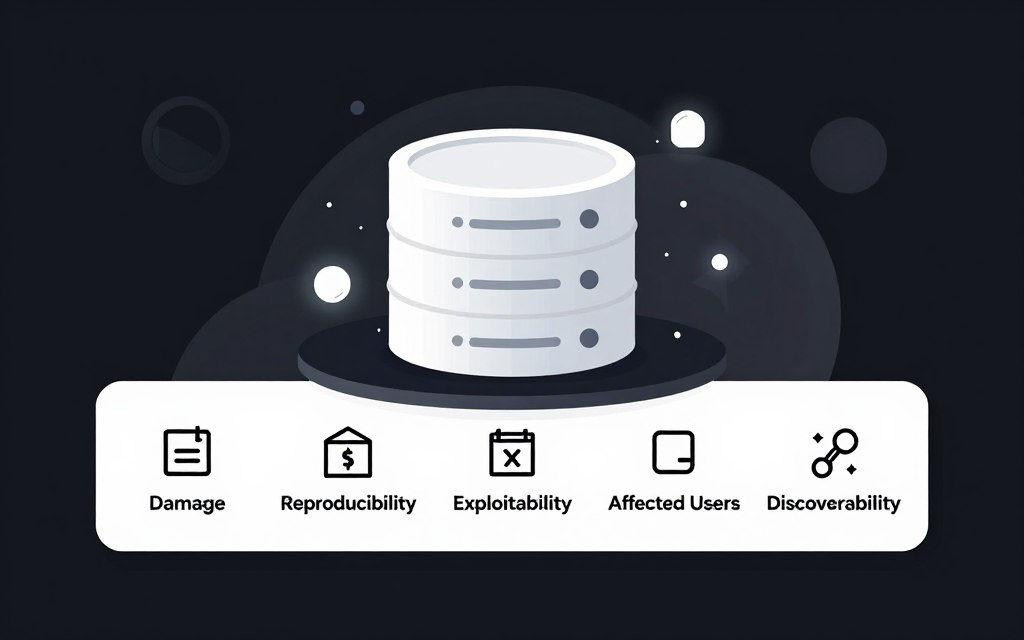
This methodology helps you assess risks by scoring each potential threat across five areas. The acronym stands for Damage, Reproducibility, Exploitability, Affected users, and Discoverability. You evaluate how bad, how likely, and how visible an attack could be.
Rating these components on a simple scale creates a quantitative analysis. A high DREAD score signals a critical vulnerability demanding immediate attention. This objective data drives smarter resource allocation for your team.
Use the table below to apply the DREAD framework systematically. It guides your scoring and turns complex judgments into a repeatable process.
| DREAD Component | Key Question for Scoring | Rating Scale (Example) |
|---|---|---|
| Damage Potential | How severe is the impact if exploited? | Low (1) to High (3) |
| Reproducibility | How easy is it for attackers to repeat the attack? | Difficult (1) to Easy (3) |
| Exploitability | What skill level is needed to launch the attack? | Expert (1) to Novice (3) |
| Affected Users | How many people or systems would be impacted? | Few (1) to All (3) |
| Discoverability | How easy is it for an attacker to find the weakness? | Obscure (1) to Public (3) |
This approach justifies your security investments with hard numbers. You present a prioritized list of risks based on calculated scores. The DREAD model ensures your defenses are always aligned with the greatest danger.
Assessing Vulnerabilities with the CVSS Framework
The Common Vulnerability Scoring System (CVSS) gives every weakness in your system a clear, numerical voice. How do you move from a long list of potential issues to a prioritized action plan? This standardized framework, developed by NIST and maintained by FIRST, provides the answer.
It translates complex technical flaws into a simple severity score. This score immediately communicates urgency to your development and operations teams. You stop debating and start fixing based on objective data.
Understanding Base, Temporal, and Environmental Metrics
The power of CVSS lies in its three metric groups. Base metrics evaluate the intrinsic characteristics of a flaw—its exploitability and impact. Think of this as the inherent danger level.
Temporal metrics adjust the score based on factors that change over time. Is there a known exploit code available? This layer reflects the current threat landscape.
Finally, environmental metrics let you customize the assessment for your specific setup. You account for your unique safeguards and the value of your affected assets. This final score tells you the real business risk.
Integrating CVSS into your security modeling ensures your analysis is consistent and reliable. It creates a common language for your entire organization. You can continuously monitor your risk posture as new vulnerabilities emerge.
Mapping Attacker Tactics with Attack Trees
Attack trees turn the complex puzzle of security into a clear, visual hierarchy of risks. You map out every possible avenue an intruder could take to reach a critical goal.
This method provides a structured way to think like an adversary. You see the entire battlefield from their perspective.
Building Comprehensive Tree Diagrams for Threat Paths
Start by defining the root node as the attacker’s ultimate objective. Each branch represents a different strategy to achieve that goal.
The leaves are the specific, technical actions required. This breakdown transforms a vague threat into a series of manageable steps.
| Tree Component | Description | Security Analysis Question |
|---|---|---|
| Root Node | The primary goal of the attack (e.g., steal data). | What is the highest-value asset we must protect? |
| Branch Node | A major tactic or sub-goal within the attack path. | Does our control block this entire approach? |
| Leaf Node | A single, concrete action an attacker must perform. | Is this specific action monitored or prevented? |
| AND Gate | Requires all child nodes to be true for success. | Can we break one link to stop the entire chain? |
| OR Gate | Requires only one child node to be true for success. | Do we have defenses for every possible option? |
By mapping these tactics, you can pressure-test your countermeasures. This modeling process shows if your controls block every logical path.
You stop complex threats by addressing their simplest components. Your security posture becomes proactive and precise.
Integrating Trike for Risk Management and Defense
What if your security framework could not only identify risks but also ensure every stakeholder agrees on the acceptable level of danger? The Trike framework makes this possible.
This unique method approaches threat modeling from a risk management and defensive perspective. You start by building a requirement model.
You list all actors and assets in your system. This helps you define clear security rules for protection.
Mapping each element to specific actors lets you spot potential threats early. You can find issues like elevation of privilege or denial of service.
The core of Trike is its five-point probability scale. You use it to assess the risk of attacks affecting your assets.
These attacks target create, read, update, and delete (CRUD) actions. The table below shows how the scale works.
| Probability Level | Description | Example CRUD Impact |
|---|---|---|
| Very Low | Attack is highly improbable and theoretical. | Unauthorized data view from an obscure internal log. |
| Low | Possible but requires unlikely conditions. | Update failure due to a rare race condition. |
| Medium | Attack is feasible with moderate effort. | Illegitimate record creation via a known API flaw. |
| High | Likely to occur given common techniques. | Widespread data deletion via a SQL injection. |
| Very High | Almost certain; minimal barriers for attackers. | System-wide privilege escalation from a default admin account. |
This structured modeling provides a clear path. It ensures your assigned level of risk is acceptable to all project stakeholders.
You move from a list of threats to a consensus on defense. This alignment is the true power of the Trike approach.
Exploring Hybrid Methods in Threat Modeling
Why rely on a single lens when you can view your security landscape through multiple, powerful frameworks at once? The Hybrid Threat Modeling Method (hTMM), developed by the SEI in 2018, answers this need. It merges established techniques into one cohesive approach.
Combining Techniques for Robust Security Analysis
You integrate different frameworks to ensure no critical threats are overlooked. This creates a comprehensive view of your security posture. It considers your unique organizational processes and feedback loops.
By combining techniques, you achieve more consistent results. Your analysis becomes less dependent on individual expertise. This standardization improves your overall security significantly.
Hybrid methods let you tailor your strategy to specific project needs. Your defense becomes both cost-effective and highly efficient. You build a robust shield aligned with real-world risks.
| Advantage | Description | Outcome |
|---|---|---|
| Comprehensive Coverage | Integrates multiple frameworks like STRIDE and PASTA | No critical threats are overlooked |
| Context-Aware | Adapts to your specific organizational processes and feedback | Identifies truly relevant risks |
| Consistent Results | Standardized approach reduces analyst dependency | Reliable security findings every time |
| Tailored Defense | Allows strategy customization per project needs | Cost-effective and highly efficient protection |
Evaluating Operational Security through OCTAVE
How do you ensure your security strategy actually protects your most critical assets against real-world attacks? The Operationally Critical Threat, Asset, and Vulnerability Evaluation (OCTAVE) method provides a clear path. Created by the CERT Division of the SEI in 2003 and refined in 2005, this structured approach focuses on your organizational risk profile.

You use OCTAVE’s three-phase process to build asset-based threat profiles. This helps identify weaknesses within your entire information infrastructure. The method shifts focus from isolated technical flaws to the broader operational picture.
This assessment ensures your defensive efforts align with business realities. You evaluate current practices and technology to make informed decisions. The goal is a significant reduction in the risk of a successful attack.
| Phase | Primary Goal | Key Output |
|---|---|---|
| Phase 1: Build Asset-Based Threat Profiles | Identify critical assets and related security requirements. | A prioritized list of organizational assets and their threats. |
| Phase 2: Identify Infrastructure Vulnerabilities | Examine technology components for weaknesses. | A catalog of technical vulnerabilities linked to critical assets. |
| Phase 3: Develop Security Strategy & Plans | Create a mitigation plan based on risk analysis. | A practical, business-aligned security strategy and action plan. |
This modeling framework turns assessment into actionable strategy. You protect what matters most with confidence.
Integrating Threat Modeling Within DevSecOps Pipelines
Imagine your security checks running automatically every time a developer commits new code. This is the power of modern integration. Frameworks like VAST allow you to weave threat modeling directly into your development and DevOps lifecycles.
Seamless Integration for Continuous Security Assessment
You achieve continuous security assessment by embedding these practices into your pipeline. This shift catches potential issues early in the development cycle.
It prevents much costlier fixes after deployment. Your security becomes a core component, not an afterthought.
This approach produces actionable results for different stakeholders. It bridges the gap between your development and infrastructure teams effectively.
You gain the ability to scale your security efforts reliably as your systems grow. The table below highlights the key shifts this integration enables.
| Aspect | Traditional Security Review | Integrated DevSecOps Approach |
|---|---|---|
| Timing | Late-stage, pre-deployment gates | Continuous, automated checks at every commit |
| Stakeholder Alignment | Separated teams, delayed feedback | Unified visibility and immediate, shared results |
| Issue Cost | High (post-development rework) | Low (early detection and fix) |
| Scalability | Manual, process-heavy | Automated, consistent across the entire infrastructure |
Embracing AI & Machine Learning for Enhanced Threat Intelligence
Can your security team keep pace with the thousands of new attack patterns emerging every day? Manual processes are no longer enough. Artificial intelligence and machine learning provide the advanced threat intelligence you need to stay ahead.
These technologies automate the gathering and analysis of security data. They predict potential threats with remarkable speed and accuracy. This lets you respond to emerging risks before they impact your operations.
Automating Complex Attack Scenario Analysis
AI excels at scenario modeling for large-scale systems. It analyzes vast amounts of log and network data to uncover hidden patterns. These patterns often indicate a sophisticated threat targeting your infrastructure.
This automation drastically reduces the manual burden on your security team. Your experts can then focus on high-level strategy and complex mitigation. Your defenses become dynamic and capable of countering modern attacks.
| Analysis Dimension | Manual Process | AI-Driven Approach |
|---|---|---|
| Speed of Detection | Hours to days | Real-time to minutes |
| Scale of Data Processed | Limited samples | Millions of events daily |
| Identification of Novel Patterns | Relies on known signatures | Discovers unknown anomalies |
| Team Resource Allocation | High manual effort | Frees staff for strategic tasks |
Embracing these tools ensures a proactive and intelligent security posture. You move from reactive firefighting to predictive defense.
Adapting Threat Modeling for Cloud Environments
Your cloud provider manages the hardware, but the responsibility for securing your data remains squarely on your shoulders. This shared responsibility model changes everything. Your attack surface now includes APIs, web consoles, and multi-tenant infrastructure you don’t own.
You must adapt your threat modeling process to this new reality. Static on-premises assumptions fail in a dynamic cloud. Your analysis must account for elastic scaling, ephemeral workloads, and third-party managed services.
Tailoring Controls to Cloud-Specific Vulnerabilities
Cloud-specific methodologies, like the Cloud Security Alliance’s Cloud Controls Matrix (CCM), provide a vital blueprint. They focus on compliance and unique vulnerabilities like misconfigured storage buckets or identity and access management (IAM) flaws.
You tailor your security controls to address these specific risks. A step-by-step guide to database firewall configuration is a start, but cloud-native tools are essential. This proactive approach helps you maintain compliance while defending against modern threats.
| Security Dimension | Traditional On-Premises | Cloud Environment |
|---|---|---|
| Infrastructure Control | Full physical and logical control | Shared responsibility; provider manages hardware |
| Attack Surface | Fixed network perimeter | Dynamic, API-driven, and globally accessible |
| Key Vulnerability | Unpatched server software | Misconfigured service settings and IAM policies |
| Scalability of Defenses | Manual, hardware-dependent | Automated, elastic, and policy-driven |
This adaptation lets you scale your protection seamlessly with your cloud resources. You gain consistent defense across all environments, turning cloud flexibility into a security strength.
Focusing on Privacy with Specialized Techniques
The LINDDUN framework provides a six-step method to systematically assess privacy risks in your data flows. You need a process that protects sensitive user details while still spotting malicious activity.
Generic security checks often miss critical privacy concerns. Specialized techniques fill this gap.
Balancing Data Protection and Threat Detection
LINDDUN helps you balance strong data protection with effective threat detection. It guides you to identify issues like linkability and identifiability.
These concepts are vital for maintaining the security of your information. You iterate over all system elements to build threat trees.
This highlights where sensitive user data might be leaking. Your analysis addresses both technical flaws and user privacy rights.
| Privacy Concern | Security Detection Challenge | LINDDUN Mitigation Step |
|---|---|---|
| Linkability | Distinguishing normal from malicious data patterns | Apply data anonymization techniques |
| Identifiability | Monitoring systems without exposing user identity | Implement pseudonymization processes |
| Data Leakage | Detecting exfiltration in encrypted flows | Construct and analyze privacy threat trees |
This specialized modeling ensures a more trustworthy system. You demonstrate commitment to robust security and responsible handling of personal information.
database threat modeling techniques: A Practical Perspective
Certifications transform theoretical knowledge into practical, hands-on skills you can apply immediately. The Certified Threat Modeling Professional (CTMP) course is a vendor-neutral program. It provides this exact training in secure design principles for your infrastructure.
You learn to apply a structured process. This lets you create an abstract of your system and generate detailed reports on potential attacker goals. This modeling work reveals deep insights into vulnerabilities that could emerge later.
This practical perspective moves you beyond theory. It allows you to implement real-world security measures that actively protect your most valuable data assets. You stop planning and start defending.
Consistent application of these methods sharpens your ability to analyze and mitigate threats in any development environment. Your overall security posture becomes stronger and more proactive.
Strengthening Your Security Posture for Emerging Threats
The final step in your journey isn’t a checklist; it’s a commitment to a culture of continuous security improvement. This means regularly reviewing your systems and updating your threat modeling to counter new attack methods.
Staying informed on the latest trends lets you address risks before they impact your operations. This ongoing work is the true foundation of a resilient and trustworthy data infrastructure.
Your dedication to this process empowers you to solve critical data problems. It ensures a strong defense against all future challenges.