

Did you know that 95% of businesses struggle with data silos and trust issues when sharing information? This isn’t just an IT problem—it’s a multi-million dollar risk to your operations.
You’re facing a critical decision. How do you maintain rock-solid data integrity across partners and keep your entire system secure? Traditional databases are fast, but they can’t provide the universal, tamper-proof verification modern business demands.
Blockchain technology offers a revolutionary fix. It creates a decentralized, immutable record that everyone can trust. This isn’t about ripping out your current infrastructure. It’s about strategically enhancing it where trust matters most.
Your high-performance database handles the speed. A distributed ledger provides the unbreakable audit trail. This guide cuts through the hype to show you the real “why” and “how.”
We’ll tackle scalability, integration complexity, and architecture choices head-on. You’ll get a clear roadmap for hybrid solutions that leverage the strengths of both worlds. Let’s build a future where your data is both fast and unquestionably true.
The Evolution of Data Management in the Blockchain Era
The pressure to share data across company lines exposed a fatal flaw in traditional systems: a complete lack of verifiable trust. Your organization’s data management approach has been under pressure for years. Centralized systems create single points of failure that kept you up at night.
From Centralization to Decentralization
Old-school, centralized databases worked when one firm controlled everything. Cross-company workflows shattered that model. They revealed critical trust gaps no service agreement could fix.
The shift to decentralized networks wasn’t about trends. Businesses needed to share verifiable data without opening their core systems to competitors. This is a fundamental change in philosophy.
Modern Approaches to Data Integrity
Today’s solution isn’t an either-or choice. Modern data integrity blends the speed of private databases with a blockchain verification layer. You get the best of both architectures.
You maintain operational data in your fast, familiar systems. Simultaneously, you anchor critical changes to an immutable ledger. This hybrid model creates trust across entire networks.
| Data Management Approach | Key Pain Point | Modern Solution |
|---|---|---|
| Centralized | Single point of failure; no external trust | Internal operational speed |
| Decentralized | Slower verification; complex for all data | Cryptographic proof for shared facts |
| Hybrid | Managing two systems | Combine private speed with public verification |
Your strategy now requires a clear split. Identify which data needs decentralized, tamper-proof verification and which just needs reliable storage. This evolution empowers your entire organization.
Data Integrity and Security in Modern Systems
Your database logs say one thing, but what if the audit trail itself has been silently edited? This isn’t theoretical. An insider with sufficient privileges can alter records and cover their tracks. The result isn’t just data corruption—it’s regulatory fines and shattered trust that takes years to rebuild.
You need a seal that can’t be broken. Blockchain’s immutable ledger provides exactly that. Once information is recorded, any change creates obvious cryptographic inconsistencies across the entire network. This is your proof.
The security here is mathematical. Data gets encrypted and distributed across nodes. Each transaction links cryptographically to the previous one. You’re protecting against both external attacks and internal manipulation simultaneously.
This approach moves beyond hoping your controls work. It delivers verifiable data integrity. Explore the real-world blockchain benefits for securing critical systems against fraud.
Benefits of Integrating Databases with Blockchain
Imagine slashing your reconciliation process from a week-long headache to a five-minute verification task. That’s the tangible power of merging these technologies. You’re not rebuilding your entire data infrastructure.
You’re adding an unbreakable verification layer for your most critical records. Audit trails, compliance logs, and multi-party transactions gain permanent immutability.
Your organization builds unprecedented trust. Authorized partners can independently verify transaction histories. They won’t need to call your team for proof.
Security gets a massive upgrade. SHA-256 hashing and distributed node verification make unauthorized changes obvious. Fraud becomes virtually impossible without network-wide detection.
The business impact is direct and measurable. See how specific pains turn into solved problems:
| Business Pain Point | Blockchain-Enhanced Solution | Direct Impact |
|---|---|---|
| Slow, costly reconciliation with partners | Shared, tamper-proof ledger for all authorized parties | Cut process time from days to minutes |
| High fees for third-party transaction verification | Smart contracts execute and validate automatically | Dramatically reduce intermediary costs |
| Internal disputes over data changes | Cryptographic proof for every transaction | Eliminate “who changed what” arguments instantly |
| Complex, manual compliance audits | Permanent, self-verifying audit trails | Provide auditors with undeniable proof of data integrity |
This approach transforms slow, trust-based processes. You gain automated, proof-based efficiency. Your core systems stay fast. Your critical data becomes beyond reproach.
Enhancing Security with Decentralized Ledger Systems
Forget trusting your database admin; start trusting cryptographic chains that can’t be secretly altered. Decentralized ledger systems shift your security foundation from centralized control to distributed, mathematical proof.
This approach eliminates the single point of failure. Your protection now spans an entire network of nodes.
Cryptographic Techniques and Immutable Records
Each piece of your data gets a unique cryptographic hash. Think of it as a digital fingerprint.
If you change even one character, the fingerprint becomes completely different. This hash gets linked to the previous block’s hash, forming a tamper-evident chain.
Altering an old record would require recalculating every subsequent hash on most of the network. That’s computationally impossible.
| Security Aspect | Centralized Database | Decentralized Ledger |
|---|---|---|
| Point of Failure | Single server or admin account | Distributed across all network nodes |
| Data Alteration | Possible with sufficient privilege | Breaks the cryptographic chain, alerting the entire network |
| Attack Detection | Relies on logs and monitoring | Automatic via consensus mismatch |
| Trust Basis | Relies on people and procedures | Relies on mathematical proof and code |
Your data integrity is now verified by the network itself. One compromised node cannot corrupt the shared truth.
Unlocking Transparency in Supply Chain and Other Sectors
Walmart transformed food safety by tracking produce on a blockchain, cutting traceback time from days to seconds. This real-world example shows the power of transparent data.
Your supply chain gains end-to-end visibility. Each handoff gets recorded on an immutable ledger. All partners can verify the data, but none can manipulate it.
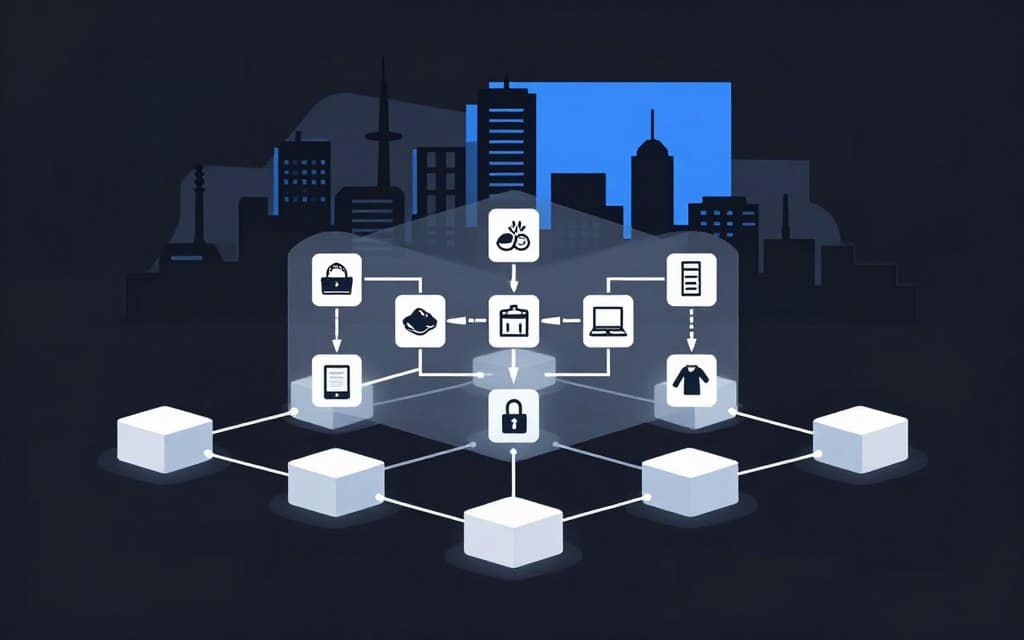
Transparency means trusting the information. Cryptographic proof confirms no one altered shipment records after the fact. Scan a product code to see its complete journey: origin, conditions, inspections.
Other sectors benefit too. Pharmaceutical companies use this same technology. They ensure medication authenticity and prevent dangerous counterfeit drugs from reaching patients.
| Aspect | Traditional Tracking | Blockchain-Enabled Tracking |
|---|---|---|
| Visibility | Fragmented, siloed data | End-to-end, shared ledger |
| Trust in Data | Relies on manual audits | Cryptographic proof, tamper-evident |
| Dispute Resolution | Time-consuming, he-said-she-said | Instant, based on immutable record |
| Counterfeit Detection | Difficult, often after the fact | Immediate, via provenance mismatch |
This level of transparency eliminates partner disputes. Everyone works from the same tamper-proof record. You build accountability at every step in the chain.
Revolutionizing Data Sharing and Verification
How do you get ten different companies to agree on a single version of the truth without a central referee? This is the core challenge of modern data exchange.
Role of Consensus Mechanisms
Consensus is the answer. It’s the process where a distributed network agrees a transaction is valid before recording it.
This mechanism replaces trust in a single entity. Every participant follows the same cryptographic rules to validate information.
| Consensus Mechanism | How It Works | Key Benefit for Data Sharing |
|---|---|---|
| Proof of Work (PoW) | Nodes solve complex puzzles to add blocks. | Makes faking transactions prohibitively expensive. |
| Proof of Stake (PoS) | Validators risk their own assets to verify. | Aligns economic incentives with honest verification. |
The result? Real-time data verification happens automatically. When you query the ledger, you see what the honest majority has validated as true.
This eliminates weeks of manual reconciliation. All parties access the same verified data simultaneously. The consensus mechanism itself becomes the binding agreement across organizations.
Even if some nodes fail or act maliciously, the honest network maintains integrity. Your shared data remains trustworthy and tamper-evident.
Smart Contracts and Decentralized Applications Explained
What if your payment to a supplier was automatically released the moment their delivery was verified, without a single invoice or manual approval? That’s the power of smart contracts.
These are self-executing agreements. The business logic lives directly on the blockchain network itself.
You replace trust in lawyers or escrow agents with trust in auditable, immutable code. Every party reviews the terms before anything happens.
When a shipment arrives and proof scans to the ledger, the contract triggers. Payment moves instantly. This deterministic execution eliminates timing disputes.
Decentralized applications, or DApps, build on this idea. They let multiple organizations run shared business logic. No single company controls the rules.
Your licensing system could use a smart contract. It would distribute royalties automatically based on usage data recorded on-chain. Administrative overhead drops to near zero.
The transparency is key. All parties can audit the contract logic before funds or data change hands. This reduces the “leap of faith” in traditional agreements.
| Process Step | Traditional Escrow System | Smart Contract System |
|---|---|---|
| Agreement Setup | Legal documents, third-party agent | Code deployed to the blockchain |
| Condition Verification | Manual checks, prone to delay | Automatic via on-chain data triggers |
| Fund Release | Bank transfer after manual approval | Instant, automatic crypto transaction |
| Dispute Potential | High, based on interpretation | Low, execution is deterministic |
| Audit Trail | Separate logs, can be contested | Immutable, shared ledger record |
Your applications inherit the security of the underlying system. The business rules cannot be altered after consensus. This creates neutral ground for complex multi-party workflows.
Practical Use Cases Across Industries
Companies like Ripple and Walmart aren’t just experimenting—they’re deploying blockchain solutions that cut costs and boost transparency. These real-world use cases solve critical trust problems across sectors.
Supply Chain, Healthcare, and Finance
In supply chain, Walmart tracks produce from farm to store. This slashes traceback time from days to seconds. It ensures food safety and proves authenticity.
Financial services use Ripple’s network. Cross-border payments now take seconds, not days. Transaction costs plummet by eliminating intermediaries.
Healthcare applications like MedRec give patients control. Authorized providers access complete medical histories without redundant systems. Data integrity and privacy are guaranteed.
These cases share a pattern. They solve problems where multiple parties need trusted data but don’t trust each other’s systems. Each example targets a specific bottleneck.
Addressing Scalability, Privacy, and Regulatory Challenges
Blockchain’s promise meets its practical test with three core challenges: speed, confidentiality, and the law. You must tackle these head-on for a successful deployment.
Scalability is the first hurdle. Public networks process dozens of transactions per second, not thousands. The 1 MB block size constraint forces tough choices.
Be selective. Anchor only high-value proofs on-chain. Use Layer-2 solutions for bulk processing. This preserves network performance.
Privacy presents another conflict. Immutable ledgers clash with rules like GDPR’s “right to be forgotten.” You cannot simply delete a record.
The fix is a hybrid model. Store sensitive personal data in compliant off-chain systems. Place only cryptographic hashes on the public ledger. This meets regulations while keeping verification intact.
Legal requirements and energy use vary wildly by country. Newer consensus mechanisms like Proof of Stake cut power requirements by over 99%. You still need expert legal guidance for compliance.
| Challenge | Root Cause | Practical Solution |
|---|---|---|
| Slow Throughput | Limited block size & consensus overhead | Use private chains or Layer-2 for speed; reserve main chain for final proofs. |
| Data Privacy Risk | Permanent transparency vs. “right to be forgotten” | Hybrid architecture: sensitive data off-chain, only hashes on-chain. |
| Regulatory Uncertainty | Laws lag behind technology; varies by jurisdiction | Pilot programs, legal review, and choosing energy-efficient consensus (e.g., PoS). |
These are not deal-breakers. They are design requirements. With the right architectural level of planning, you can navigate them effectively.
Navigating Integration Steps and Feasibility
Before you write a single line of code, you must map your specific business pain to a verifiable blockchain solution. This process starts with a brutally honest feasibility check.
Assessing Technical Requirements
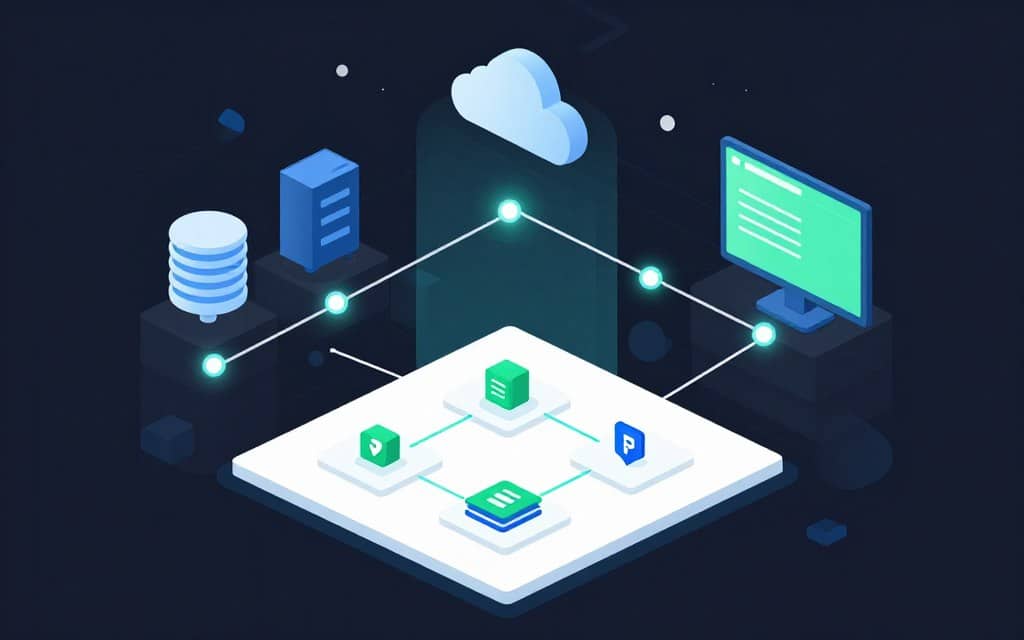
Your technical requirements dictate the architecture. Do you need a public, trustless network or a private, permissioned system? Public chains offer maximum decentralization. Private platforms like Hyperledger provide controlled access and better performance.
Design your architecture carefully. Decide which critical data gets anchored on-chain and which stays in your traditional system. This hybrid model is crucial for balancing speed with proof.
Choosing the Right Platform
Platform selection hinges on your core objectives. Ethereum excels for applications needing complex smart contracts and a vast developer ecosystem.
Hyperledger Fabric is often better for enterprise organizations. It supports confidential transactions within a known consortium. Your choice must align with throughput needs and privacy requirements.
Finally, establish a clear governance model for your new technology stack. Define who manages the infrastructure and protocol upgrades.
Key Features: Immutability, Transparency, and Efficiency
Auditors spend weeks sampling your records, a process based on trust rather than definitive proof. Three core features change this dynamic. An immutable ledger, complete transparency, and automated efficiency provide the verifiable foundation modern business demands.
Immutable Ledger Advantages
Your audit trail becomes self-validating. Once a transaction is recorded, its cryptographic fingerprint is permanent. Any alteration would break the chain across every node.
This guarantees data integrity beyond question. Auditors verify records mathematically, not through random samples. Fraudulent changes become instantly obvious and impossible to hide.
Boosting Transaction Efficiency
Smart contracts automate settlement. Payments trigger automatically when delivery is verified on the ledger. You eliminate days of manual reconciliation between organizations.
Errors plummet. All parties work from one shared source of truth. There is no manual re-entry of data between separate systems. Your transaction speed and accuracy soar.
These features work together. Transparency allows verification. Immutability ensures trust. Both create efficiency by removing the overhead of maintaining multiple versions of the truth.
Hybrid Approaches: Merging Traditional Systems with Blockchain
Hybrid architectures solve the speed-versus-trust dilemma by letting each technology do what it does best. Your operational data stays in fast, familiar traditional databases. The blockchain acts as a notary, providing an immutable seal for critical records.
This is called data anchoring. You periodically generate a cryptographic hash of your database state. Only this single hash gets written to the distributed ledger.
It creates a tamper-proof timestamp. You’re not storing all details on-chain. This slashes costs and preserves network performance.
Amazon QLDB offers a related solution. It’s a centralized ledger database. Every change is chained and hashed, creating an immutable log without distributed consensus overhead.
Your systems gain a new level of trust. When a partner questions a record, you show the hash matches the one anchored on the blockchain. It’s mathematical proof, not blind faith.
| Component | Data Location | Primary Purpose | Key Benefit |
|---|---|---|---|
| Traditional Database | On-premises or cloud | High-volume transactions & fast queries | Operational speed and familiar management |
| Blockchain Layer | Distributed network | Cryptographic verification & anchoring | Tamper-proof audit trail and external trust |
| Anchor Hash | On-chain (periodically) | Represents database state at a point in time | Low-cost, scalable proof of integrity |
This practical solution keeps sensitive data private in your controlled systems. Yet it delivers undeniable proof to any skeptical stakeholder. You get both speed and absolute verifiability.
Real-World Integration Strategies for Organizations
How do you train a finance team to trust a cryptographic ledger over the familiar database they’ve used for decades? Your real-world success depends less on the code and more on managing your people and processes.
Implementation Techniques
Begin with a focused pilot program. This limits risk and lets you refine the system before a full rollout. Your implementation must prioritize user training.
Focus sessions on workflow changes, not ledger internals. Most users just need to know when an action creates an on-chain record. Always maintain a clear rollback plan to your existing data management tools.
Ensuring Compliance and User Support
Design granular access control. Define who can write to the ledger and who can only read. This is critical for cross-organization management.
Document your procedures to prove regulatory compliance. Your support team needs new skills to troubleshoot consensus or network latency issues. Continuous monitoring of both systems is non-negotiable.
Track ledger confirmation times and API health. This proactive management ensures performance and data integrity for all users.
Emerging Trends in Blockchain and Database Innovation
Cloud giants are quietly rewriting the rules of data verification, embedding cryptographic proofs into everyday database services. This shift makes advanced integrity features accessible without a full distributed network.
Amazon QLDB is a prime example. It offers a centralized immutable ledger. This trend shows databases adopting blockchain’s core strength—tamper-proof records—at traditional speeds.
Future Hybrid Solutions
You’ll see more convergence between database types. SQL systems add ledger features. Blockchain platforms improve query tools. Each technology borrows the other’s best traits.
Layer-2 solutions are maturing fast. They process thousands of transactions off-chain. Then, they anchor a single proof to the main network for security.
Major cloud providers now offer blockchain-as-a-service platforms. Azure, AWS, and Google Cloud handle the node infrastructure. Your team can deploy in days, not months.
Future solutions will be invisible. Users interact with normal apps. Blockchain verification works silently under the hood.
Evaluate these emerging services carefully. Early adoption can give you an edge. But betting on the wrong technology standard means costly migration later.
Wrapping Up Insights and Next Steps
The path forward isn’t about a complete overhaul. It’s a targeted enhancement of your existing infrastructure.
Your next move is clear. Pinpoint one process where data disputes or trust gaps waste resources. Launch a focused strategic pilot there.
View blockchain as a powerful verification layer. It creates shared truth across organizational lines. Your core systems maintain their high-speed performance.
This hybrid approach defines modern data management. It delivers both flexibility and cryptographic proof. Your organization builds unshakeable trust while driving real innovation.