

Imagine a market exploding to USD 17.15 billion by 2030. That’s the projected value for blockchain in the supply chain, according to Market Research Future. Why such massive growth? Traditional systems are cracking under global pressure.
You’re likely dealing with delays, fraud, and frustrating blind spots. Goods seem to vanish, and records can be altered. Accountability disappears between your suppliers and final customers. It’s a crisis of trust and visibility.
This is where new technology makes a decisive impact. A decentralized ledger creates a secure, transparent network for all parties. Every transaction gets locked into an immutable record. This eliminates single points of failure and builds undeniable trust.
This guide cuts through the hype. We’ll show you how this architecture solves real problems—from stopping counterfeits to automating payments. You’ll see why it outperforms old, centralized databases for complex, multi-party networks.
We’re covering the fundamentals, practical use cases, and integration steps. Real examples from leaders like IBM Food Trust prove it’s not just theory. It’s the future of resilient data management, happening now.
Understanding Blockchain Fundamentals for Supply Chains
What if you could see every transaction in your supply chain, verified by the network itself and impossible to erase? That’s the foundational promise of this technology. To leverage it, you first need a solid grasp of its core mechanics.
What Is Blockchain?
Think of it as a decentralized digital ledger. It records transactions in groups called “blocks.” These blocks link together in chronological order, forming a permanent chain.
Network participants, known as nodes, verify each block before it’s added. Once recorded, data becomes immutable—you can’t alter or delete it. This creates a tamper-proof history.
Cryptography secures every entry. This ensures data stays unchanged unless all participants agree.
Decentralization and Trust
Traditional systems have a central authority. One entity controls the database. This creates a single point of failure and potential for manipulation.
Blockchain flips that model. It distributes the ledger across many computers. No single party has ultimate control. All your supply chain partners access the same verified information simultaneously.
This architecture solves the critical trust problem. Partners no longer need to rely on unverified claims about inventory or shipments. The shared ledger provides a single source of truth. For business networks, private or consortium models offer the controlled access you need.
Blockchain’s Secure and Transparent Architecture
Security and transparency aren’t just features—they’re built into the very fabric of this technology. This architecture directly solves your trust and visibility problems by combining unchangeable records with live access for everyone involved.
Data Integrity with Immutability
How does it lock down your information? Every piece of data gets a unique digital signature via one-way hashing. Alter a single detail, and that signature breaks, alerting the network.
At least three identical copies of the ledger exist in different locations. Tampering with one is instantly spotted against the others. Timestamps are baked into each record and linked to the prior entry.
This creates an unbreakable chain. Your supply chain data becomes a permanent, verifiable record. Auditors, regulators, and partners can trust it without question.
Real-Time Ledger Transparency
All authorized participants see the same information at the same time. No more waiting for updates or reconciling conflicting reports from different departments.
Every stakeholder accesses identical data. This eliminates the miscommunication and errors common in traditional, siloed systems. You get a single, shared source of truth.
The architecture actively prevents problems like supply theft. Every transaction leaves an indelible, traceable mark. You’re building an auditable proof trail for compliance and authenticity.
How Blockchain Technology Transforms Supply Chain Management
Your global operations are a web of complexity—goods crossing borders, systems that don’t talk, and visibility that vanishes. Traditional supply chain management struggles under this weight. It creates delays, errors, and costly fraud.
Blockchain technology rebuilds this broken model. It creates a transparent network where every transaction is recorded and shared instantly. You gain real-time tracking from raw materials to the customer’s door.
This tech acts as a universal translator for your partners. It connects disparate systems so everyone sees the same verified data. You eliminate the communication gaps that plague your supply chain.
The shift is fundamental. You move from reactive problem-solving to proactive monitoring. Blockchain technology builds unified networks where accountability is automatic. It transforms your entire approach to supply chain management.
Exploring the Role of Blockchain in Supply Chain Databases
Your current database might be a liability; distributed ledgers turn it into an asset. They replace fragmented, centralized systems with a unified view. Every authorized partner accesses identical, real-time information.
You’ll likely use permissioned networks. Only consortium members or invited partners join. This protects sensitive business data while maintaining full transparency across your chain.
Each entry becomes a permanent block. It creates an immutable record of every transaction and shipment. Traditional databases let admins alter history—this tech eliminates that vulnerability.
Your information exists across multiple nodes simultaneously. System failures or cyberattacks can’t destroy critical supply details. Real-time visibility emerges naturally.
All participants update and access the same ledger. This kills the lag from manual updates. You’re building an architecture for multi-party environments where trust isn’t assumed.
It solves the core challenge. How do you maintain data integrity when dozens of firms must read, write, and verify? This approach provides the answer for modern management.
Enhancing Traceability and Transparency in Global Supply Chains
Real-time visibility transforms supply chain management from a reactive chore into a strategic advantage. You gain unprecedented insight into every movement. This isn’t just about knowing locations—it’s about having a verified, unchangeable record for each item.
Real-Time Inventory Tracking
You see exactly where items are at any moment. This eliminates the “lost in transit” problem that plagues global supply chains.
Updates flow instantly to all authorized partners. Your visibility becomes continuous, not periodic.
Verifiable Product Histories
Every product gets a permanent digital passport. It records all inspections, quality checks, and custody transfers.
This traceability is critical for pharmaceuticals and food. You prove provenance and compliance effortlessly.
This level of traceability and transparency ensures every stakeholder operates from the same truth.
| Feature | Traditional Approach | Blockchain-Enhanced Approach |
|---|---|---|
| Data Transparency | Limited, siloed access | Shared, real-time ledger for all partners |
| Update Speed | Delayed manual entries | Instant automated recording |
| Audit Integrity | Mutable, prone to errors | Immutable, tamper-proof history |
| Fraud Prevention | Reactive, difficult to verify | Proactive, with verified product histories |
Enhanced transparency means you spot bottlenecks as they happen. You enable surgical recalls and protect your brand.
Driving Efficiency Through Smart Contracts and Automation
What if your supply chain could pay itself, coordinate logistics, and settle disputes without human intervention? That’s the power of smart contracts. These self-executing programs turn agreements into automated actions.
You embed business rules directly into code. When a sensor confirms delivery, a payment triggers. This eliminates manual bottlenecks across your entire network.
Automated Payment Processing
Your payments release instantly when goods arrive in good condition. No more waiting for invoice approvals. Smart contracts use the blockchain ledger as a verified trigger.
This slashes administrative costs and fraud. Suppliers get paid upon fulfillment, not after 90 days. Your cash flow improves dramatically for all parties.
Disputes over contract terms vanish. The immutable record provides indisputable proof. Every transaction is secure and transparent.
Streamlined Logistics Operations
Logistics coordination becomes seamless. A smart contract automatically notifies your warehouse when a shipment leaves the factory. It triggers preparation and scheduling.
You’re cutting manual verification and back-and-forth emails. This automation extends to inventory reordering and customs docs. Processes execute based on verified events.
The efficiency gain is real. Companies report 40% reductions in processing costs. Time-to-payment shrinks from weeks to mere hours.
Reducing Costs and Eliminating Middlemen in Supply Chains
Cutting costs starts by removing the trusted third parties that slow your operations and inflate expenses. These intermediaries charge fees for verification and document authentication. They become unnecessary bottlenecks.
The technology itself provides the verification and trust you need. You no longer require banks or external auditors for routine transactions. This direct approach slashes intermediary fees immediately.
Your administrative overhead plummets. Manual data entry and paper-based reconciliation vanish. Automated ledger updates replace these costly, error-prone tasks.
Inventory tracking becomes far less expensive. Automation handles stock checks and record updates. This saves significant staff hours and improves accuracy across your entire network.
Product development costs drop. All stakeholders access real-time progress data on a secure platform. This eliminates version confusion and the expensive delays from outdated information.
Faster time-to-market is a direct result. Design changes are tracked accurately for all parties. You prevent mistakes and rework that extend development cycles.
Real-world implementations show major gains. Companies report 30-40% cost reductions in logistics. Specific processes, like invoice reconciliation, see efficiency gains up to 80%.
Integrating Blockchain with Legacy Supply Chain Systems>
Integration isn’t about replacement—it’s about bridging your current technological landscape. Your organization likely runs dozens of legacy platforms. They weren’t designed to communicate with modern distributed ledgers.
Overcoming Integration Challenges
Your biggest hurdle is system interoperability. You may have 50-100 different ERP and warehouse management systems. They accumulated through mergers and departmental purchases.
This technology acts as a unifying layer. It doesn’t require ripping out old infrastructure. You consolidate data from incompatible systems into one traceability platform.
All stakeholders access this unified view. They see it regardless of their internal technology. This eliminates the blind spots in your current financial ledgers.
Careful analysis is critical for smooth integration. You must map data flows and modify specific processes. Your implementation must read from and write to existing databases.
Successful companies use phased rollouts. They prove value in pilot programs first. Typical integration timelines span 12-18 months for full deployment.
| Integration Aspect | Traditional Approach | Blockchain-Enabled Approach |
|---|---|---|
| System Architecture | Point-to-point connections between silos | Unified ledger layer bridging all systems |
| Data Consistency | Manual reconciliation with errors | Automated, synchronized single source of truth |
| Implementation Timeline | Monolithic, big-bang projects | Phased, pilot-proven rollouts |
| Stakeholder Access | Limited by internal system permissions | Permissioned access to consolidated platform |
Key Use Cases for Blockchain in Supply Chain Management>
Beyond theory, blockchain tackles real-world supply chain crises like counterfeiting and unethical sourcing. These aren’t future concepts. They’re active solutions for your high-cost problems today.
Counterfeit Prevention and Quality Assurance
Fake pharmaceuticals and luxury goods threaten lives and profits. Blockchain creates a tamper-proof record of authenticity from factory to customer.
Each product gets a unique digital passport. This stops fraud dead. Your quality assurance also automates.
The system logs every inspection and test result at each stage. You verify temperature and safety standards for the entire journey.
Sustainability Tracking and Ethical Sourcing
Consumers demand proof of environmental and ethical practices. Blockchain delivers. It tracks carbon emissions and water usage for every step.
This data is vital for accurate ESG reporting. Ethical sourcing verification goes deeper.
You trace materials back to individual farms. The ledger flags issues like unfair wages or unsafe conditions instantly.
A prime example is the IBM Food Trust platform. It lets food companies track products from farm to table.
Contamination investigations drop from weeks to seconds. Surgical recalls remove only bad items, saving millions.
| Use Case | Traditional Challenge | Blockchain Solution |
|---|---|---|
| Counterfeit Prevention | Reliance on hard-to-verify physical seals and paperwork. | Immutable digital provenance record accessible to all parties. |
| Quality Assurance | Manual, sporadic checks with paper trails prone to loss. | Automated recording of all inspections and compliance data. |
| Sustainability Tracking | Estimated, aggregated data that lacks verifiable detail. | Granular, auditable tracking of emissions and resource use per batch. |
| Ethical Sourcing | Opaque supply chains where origin details are obscured. | Transparent traceability to the source, enabling ethical verification. |
These blockchain use cases prove the technology’s concrete value. They turn visibility and trust into a competitive edge for your supply chain management.
Navigating Adoption Challenges for Blockchain in Supply Chains
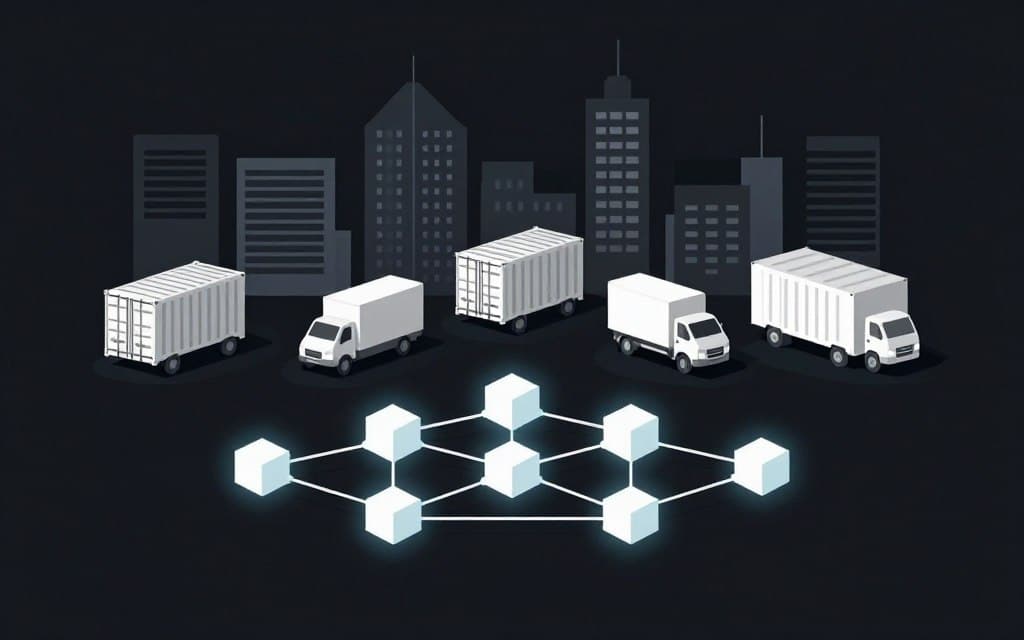
Scalability walls and cybersecurity threats are real barriers on the path to implementation. You must prepare for these hurdles.
Scalability and Legacy Barriers
Your network must handle thousands of transactions per minute. Current infrastructure can create performance delays.
These scalability issues negate hard-won efficiency gains. Legacy system integration compounds the problem.
Connecting new technology to decades-old ERP systems is difficult. These platforms weren’t designed for distributed ledgers.
Cybersecurity and Data Privacy Concerns
The distributed ledger is inherently secure. Yet vulnerabilities exist at integration points and in smart contract code.
Hackers can exploit these weaknesses. You must deploy robust cybersecurity protocols like encryption and multi-factor authentication.
Transparency creates a data privacy paradox. Sensitive business information needs protection from competitors.
Regulatory uncertainty adds another layer of risk. Governance rules vary wildly across different jurisdictions.
Implementation costs and a scarce developer pool are real challenges. These issues are significant but not insurmountable for forward-thinking supply chains.
Best Practices for Implementing Blockchain Across Supply Chains
Your blockchain initiative will only succeed if you prioritize collaboration, security, and measurable use cases from the start. Following proven best practices separates a strategic win from a costly tech experiment.
Identifying Valuable Use Cases
Don’t deploy this tech just because it’s trendy. Start by pinpointing a specific, high-impact problem. Counterfeit prevention or compliance gaps are perfect targets.
Evaluate each potential use case against worst-case scenarios and total cost. The benefits must clearly justify the investment for your supply chain.
Building Collaborative Networks
This technology only works when all stakeholders participate. You can’t force adoption. Involve your partners in the planning phase early.
Address their concerns about costs and system integration head-on. Demonstrate clear, mutual benefits for their operations. Shared protocols are essential.
Choose your network platform carefully. Scalability, security, and interoperability with legacy systems determine long-term success.
Implement robust security from day one. Use strong encryption and multi-layered access controls. Then, monitor key performance metrics continuously after launch.
Track transaction speed, error rates, and user adoption. Partner with experienced blockchain professionals who’ve done this before. They’ll guide your implementation the right way.
Blockchain Versus Traditional ERP Systems in Supply Chains
Your company’s internal operations and its external supply chain require two distinct types of data management. Enterprise Resource Planning platforms like SAP or Oracle excel within your organization’s walls.
They streamline production, inventory, and financial workflows. These are centralized systems designed for control and efficiency.
Blockchain operates on a decentralized model. It distributes information across a network of partners.
This architecture builds trust between independent companies. It provides granular traceability for goods moving between organizations.
Large enterprises often face data chaos. Mergers can leave you with dozens of incompatible ERP systems.
This creates major inconsistencies and communication gaps. Blockchain acts as a powerful integration layer here.
It bridges those disparate systems without a costly consolidation project. You gain a unified view of your external supply chain data.
The technologies are complementary, not competitive. Use ERP to optimize internal processes you control.
Use blockchain to create visibility and trust across processes shared with others. Together, they solve both sides of your management challenge.
Future Innovations: Convergence of Blockchain, IoT, and AI>
True innovation happens when blockchain, IoT, and AI work as one system. This powerful convergence creates intelligent, self-optimizing logistics networks. You move beyond basic tracking.
Smart Data Analytics for Supply Chains
AI excels at finding patterns in massive data streams. It analyzes information from IoT sensors and the immutable ledger.
This enables true predictive analytics. The technology can forecast equipment failures before they happen. It recommends route changes based on live weather patterns.
For example, AI correlates a refrigeration unit’s service history with a forecasted heatwave. It then suggests a vehicle switch to protect a sensitive shipment. This proactive technology prevents costly quality issues.
Enhanced Real-Time Monitoring
IoT devices attached to shipments generate constant data. They monitor temperature, humidity, location, and shock. This information transmits directly to the blockchain technology ledger.
Every condition change is automatically and immutably recorded. There are no manual entry errors. Smart contracts use this trusted data to trigger actions.
Payments release automatically when a temperature-controlled delivery maintains its range. Alerts fire instantly if a threshold is breached. This creates flawless, end-to-end visibility for your supply chains.
| Capability | Traditional Monitoring | Converged System (Blockchain + IoT + AI) |
|---|---|---|
| Data Integrity | Manual logs, prone to alteration or loss. | Immutable, cryptographically secured records from source. |
| Predictive Response | Reactive problem-solving after issues occur. | AI-driven forecasts that recommend preventive actions. |
| Process Automation | Human-dependent verification and payment. | Smart contracts auto-execute based on verified IoT data. |
| Operational Insight | Silod reports with lagging indicators. | Unified, real-time dashboard for all network partners. |
This convergence is active today. Leading firms report 25-30% gains in on-time delivery and product quality. It turns raw data into decisive intelligence.
Market Trends and Growth Projections in Blockchain Supply Chains>
The trajectory for distributed ledger technology in logistics points toward massive, sustained expansion over this decade.
Industry Forecasts Through 2030
Market Research Future projects this sector will hit USD 17.15 billion by 2030. This growth is not speculative hype.
It’s fueled by real business needs for verifiable transparency and traceability. Companies now see visibility as a core competitive edge.
Regulatory pressure is a major catalyst. The EU’s Corporate Sustainability Reporting Directive mandates detailed impact disclosure.
You need auditable data to comply and prove your sustainability claims. Voluntary reporting is becoming mandatory.
Major players like FedEx and UPS are investing heavily. They view this tech as essential for next-generation shipping services.
Adoption is spreading from pharmaceuticals into mainstream manufacturing and retail. An interconnected ecosystem is emerging.
Each new participant increases value for all users. This creates powerful network effects across the entire supply chain management landscape.
| Market Driver | Traditional Influence | Blockchain-Enhanced Impact |
|---|---|---|
| Regulatory Compliance | Reactive, manual reporting prone to errors. | Proactive, automated audit trails from immutable data. |
| Consumer Demand | Brand claims with limited verification. | Granular, real-time proof of ethical sourcing and sustainability. |
| Operational Efficiency | Incremental gains from siloed system optimization. | Step-change improvements from shared ledger automation and trust. |
| Competitive Advantage | Based on cost or speed alone. | Rooted in verifiable supply chain integrity and resilience. |
Market growth converges from three forces. Regulatory mandates, consumer transparency demands, and the need for efficiency drive this adoption worldwide.
Boosting Trust, Compliance, and Regulatory Alignment
Regulatory demands are tightening, but your proof of compliance can now be automatic and undeniable. An immutable ledger provides indisputable evidence for every transaction and inspection.
Trust becomes built-in. You’re not asking partners to believe your reports. The permanent record speaks for itself and can’t be altered after the fact.
Auditors from multiple parties can examine the same data simultaneously. This catches errors or fraud that slip through single-source systems. The main hurdle is a lack of universal standards for documentation.
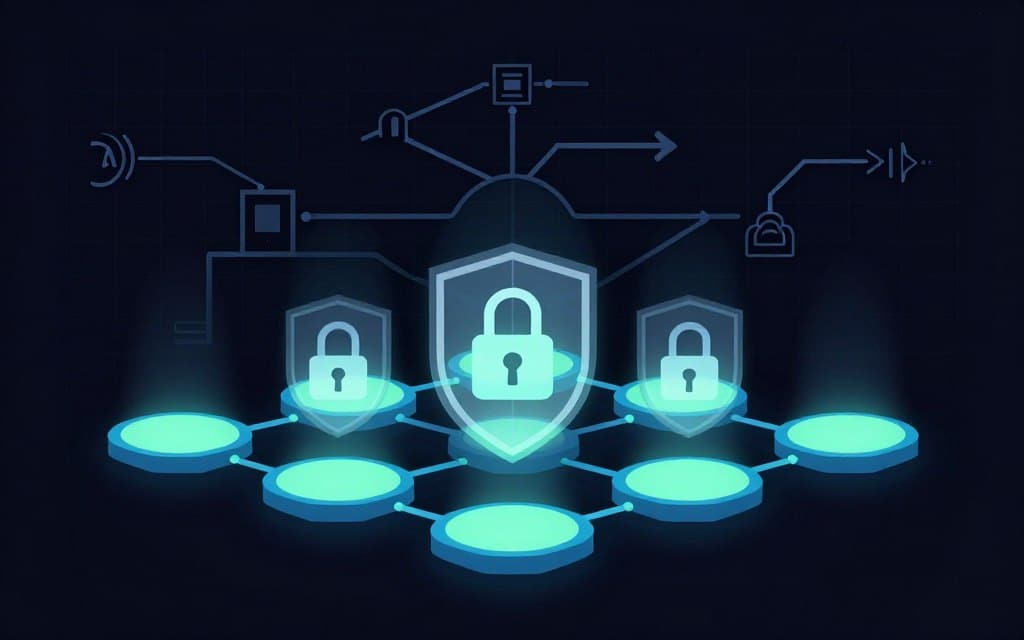
Large firms like Walmart often drive the rules. They set formats and governance for their networks. This creates audit trails that satisfy diverse regulations across borders.
One unified system serves many regulatory frameworks. You demonstrate adherence to safety and environmental rules effortlessly.
| Compliance Process | Traditional Method | Blockchain-Enhanced Method |
|---|---|---|
| Audit Preparation | Manual gathering of scattered documents and logs. | Instant auditor access to a complete, immutable ledger. |
| Data Verification | Time-consuming cross-referencing prone to human error. | Cryptographically sealed records verified by the network at creation. |
| Multi-Jurisdiction Reporting | Separate reports tailored for each region’s requirements. | Single, granular data source that can be filtered for any jurisdiction. |
| Standard Adherence | Reliance on inconsistent partner documentation. | Enforced data formats and rules set by network orchestrators. |
Final Reflections on Blockchain Transforming Supply Chain Management
The true power of this tech lies in its ability to democratize access and empower every participant in the network.
We’re moving beyond basic operational fixes. The transformation enables new models like tokenized asset trading and peer-to-peer financing. This opens doors for smaller businesses.
Imagine a customer scanning a QR code. They instantly see a product’s full journey and carbon footprint. This blockchain technology builds unprecedented consumer trust.
Your future competitive position hinges on adoption choices today. Early movers are locking in advantages. Integration with AI and IoT creates intelligent, self-optimizing networks.
The role of blockchain in supply chain databases is evolving into foundational infrastructure. It enables global collaboration at scale. Your decisions now will define your resilience for years to come.