

A staggering 73% of data breaches start with compromised access credentials. Your most valuable assets live inside these critical systems.
Think about customer records, financial details, and intellectual property. They are the lifeblood of your operation.
Every day, sophisticated threats target this information. Methods like SQL injection and ransomware attacks are common.
Traditional perimeter defenses often fail. Hackers exploit vulnerabilities like stolen credentials to access sensitive material.
Many organizations struggle to safeguard their information. Outdated approaches cannot stop modern attacks.
Organizations must adopt a new mindset. This guide provides a better path.
We will explore a model that verifies every request. It focuses on protecting assets directly.
You will learn how to lock down your infrastructure. We shift the focus from network borders to the resources themselves.
Zero Trust: The Evolution of Database Security
In 2010, a pivotal shift began with Forrester’s introduction of a new cybersecurity model. It moved the goalposts away from defending a network’s edge. The old idea of a secure internal perimeter was officially broken.
This framework treats every access request as a potential threat. You must verify it explicitly. The National Institute of Standards and Technology (NIST) later formalized this plan in its SP 800-207 publication.
Understanding the Cybersecurity Shift
The traditional “trust but verify” approach is obsolete. Why? Internal users and systems can no longer be assumed safe. A compromised employee credential can be as dangerous as an external hacker.
Modern zero trust architecture requires continuous authentication. It doesn’t matter if a request comes from inside your office or a coffee shop across the globe. Every single attempt must prove its legitimacy.
Impact of Cloud, Remote Work, and Third-Party Integrations
Your operational landscape has changed dramatically. Widespread cloud adoption and hybrid workforces have dissolved the corporate network boundary. Your sensitive information is now everywhere.
This environment forces a fundamental change. You must treat the data itself as the primary security perimeter. Every integration with a third-party vendor introduces another potential access point that needs scrutiny.
This evolution isn’t optional. It’s the necessary response to how we work and where our assets live today.
Key Principles in a Zero Trust Framework for Database Protection
What separates a robust data protection plan from a vulnerable one? It’s the deliberate application of key security doctrines. For a foundational understanding, review the basics of database security. These core ideas form an operational blueprint.
Least Privilege Access and Role-Based Controls
This principle is straightforward. Grant only the minimum permissions needed for a task. A finance user shouldn’t see engineering source code.
Role-based controls enforce this automatically. They tie access controls to job functions. This drastically reduces your attack surface.
Micro-Segmentation for Lateral Movement Prevention
Think of your network as a ship with watertight compartments. A breach in one area is contained. It cannot flood the entire vessel.
Micro-segmentation creates these isolated zones. It stops unauthorized movement between systems. This control is critical for containing threats.
Continuous Authentication and Real-Time Monitoring
Static passwords are obsolete. Continuous verification checks identity and context with every request. It looks at device health and behavior patterns.
Real-time monitoring watches for unusual activity. It alerts you to anomalies instantly. This allows you to stop an incident before it escalates.
| Principle | Core Action | Primary Benefit |
|---|---|---|
| Least Privilege | Limits user and app permissions to the bare minimum. | Reduces insider risk and limits blast radius. |
| Micro-Segmentation | Creates isolated zones across network and data layers. | Prevents lateral movement of threats. |
| Continuous Monitoring | Dynamically verifies every access request in real-time. | Detects and responds to anomalies immediately. |
Implementing Zero Trust Security for Databases
How do you translate powerful principles into daily operational reality? You need a structured approach that enforces strict controls for every connection.
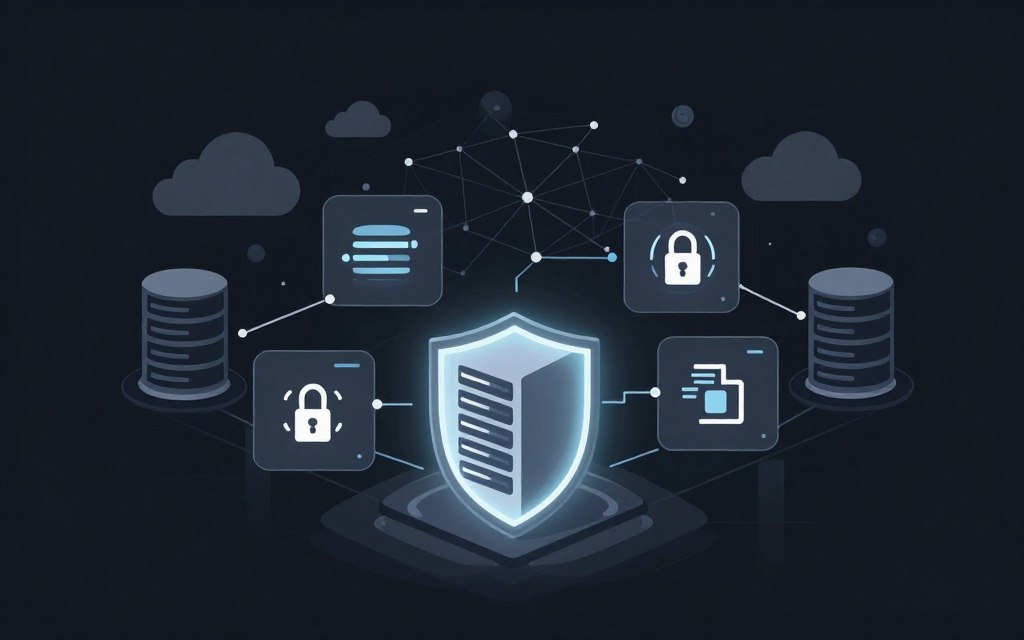
This shift moves from concept to concrete action. It systematically locks down your most critical data environments.
Step-by-Step Integration Strategy
Begin with a full assessment. Map all your data assets and user access flows. This creates a clear baseline.
Next, define granular policies. These rules govern who can reach what information and when. Continuous authentication must validate every request.
The final phase is active enforcement. Apply these policies across your entire infrastructure. This creates a consistent security posture.
Leveraging Identity and Access Management (IAM)
Robust identity and access management is your control center. It ensures only verified users and services get in.
Multi-factor authentication (MFA) adds a critical layer. It requires a second proof of identity, like a phone code.
Role-based access control (RBAC) assigns permissions by job function. Automated workflows can then revoke access when a task is done.
| Implementation Pillar | Core Action | Primary Outcome |
|---|---|---|
| Integration Strategy | Assess, define policies, and enforce controls systematically. | Creates a repeatable, scalable process for protection. |
| IAM Leverage | Deploy MFA, RBAC, and automated privilege management. | Ensures dynamic, identity-centric access governance. |
| Continuous Operation | Monitor and adapt policies in real-time. | Maintains a resilient and responsive security stance. |
Overcoming Limitations of Traditional Database Security
Perimeter defenses create a hardened shell, yet the most dangerous threats often originate from within. Your organization might feel protected by firewalls and VPNs. This model assumes anyone inside the network is safe.
Addressing Overreliance on Perimeter Defenses
Primary threats like SQL injection bypass these walls completely. A compromised VPN credential lets an attacker move freely. They pivot across flat network structures to reach high-value data.
Insider risk remains significant. Employees or compromised accounts often have excessive control. This excessive access is a major vulnerability for any application.
You must address the lack of continuous monitoring. Traditional models allow attackers to operate undetected. This leaves your users and data exposed for long periods.
A new approach is needed. It must verify every user and action continuously. This reduces your overall risk from both external and internal threats.
Data-Centric Strategies in a Zero Trust World
When access controls fail, the last line of defense is rendering your critical information useless to attackers. You must shield the asset itself, not just the gate. This demands direct data protection techniques.
Encryption, Tokenization, and Integrity Checks
Use AES-256 encryption as your standard. It scrambles sensitive data at rest and in transit. Even during a breach, the content stays unreadable.
Tokenization swaps real data fields with harmless tokens. This shields information during processing within your applications. Integrity checks then verify that no one has altered the records.
Data Discovery and Classification Techniques
Automated tools scan your platforms to find and label sensitive data. They use content, context, and metadata tags. Persistent classification ensures controls follow the data everywhere.
Confidential computing adds another layer. Trusted Execution Environments, like AWS Nitro Enclaves, isolate data in secure hardware. This protects it while actively in use.
| Technique | How It Works | Primary Benefit |
|---|---|---|
| AES-256 Encryption | Scrambles data using a 256-bit key | Renders data unreadable without the decryption key |
| Tokenization | Replaces sensitive data fields with non-sensitive tokens | Protects information during application-level processing |
| Trusted Execution Environments | Isolates data in secure, hardware-based enclaves | Secures data while it is actively in use and being computed |
Advanced Tools and Technologies Driving Zero Trust
Sophisticated attacks meet their match in a new generation of platforms built for proactive threat management. You need automated enforcement that goes beyond manual policy setting. The right technology stack turns principles into persistent protection.

Cloud-Native Security Solutions and SIEM Integration
Your cloud environment requires native, scalable tools. Security Information and Event Management systems are central. They aggregate logs and alerts from across your entire organization.
This integration allows for real-time correlation of events. You can detect complex, multi-stage attacks as they unfold. Solutions like Wiz offer agentless data discovery and contextual risk analysis.
Specialized Database Security Platforms
Dedicated platforms provide deep visibility into your data layer. Tools like Trustwave DbProtect deliver continuous activity monitoring. They use powerful analytics to spot threats that could lead to a breach.
These platforms also automate critical compliance tasks. They handle audits for standards like GDPR and HIPAA. This maintains your posture with much less manual effort.
Zero Trust Network Access Solutions for Secure Connectivity
Traditional VPNs are a major vulnerability. Zero Trust Network Access solutions verify identity before granting any connection. This applies strict controls to every user and device.
Your network becomes segmented and secure by default. Lateral movement is stopped because access is never assumed. It’s a fundamental shift in how you manage connectivity to critical assets.
Real-Time Monitoring and Behavioral Analytics
Your database’s true protection posture is revealed not by static defenses, but by its ability to spot and stop abnormal activity as it happens. This demands a system that understands normal patterns.
User and Entity Behavior Analytics (UEBA)
UEBA tools establish a baseline of normal behavior for all users and systems. They track typical access times, data volumes, and query types.
Machine learning analytics then detect subtle deviations. This reduces false alarms while catching sophisticated, unauthorized activity that static rules miss.
Anomaly Detection and Automated Response
When abnormal behavior is flagged, automated systems can respond instantly. They might suspend a session or block further access.
Continuous monitoring provides full context for every event. You see who accessed what data, when, and from where.
This approach identifies potential insider threats and compromised credentials early. It significantly lowers your overall risk before damage occurs.
Strengthening Compliance and Regulatory Readiness
Meeting regulatory demands is no longer just a checkbox exercise. It’s a core component of your data defense strategy. How do you prove your controls are working when an auditor arrives?
Aligning with Industry Standards and Best Practices
Your organization must align with frameworks like FISMA or CMMC. These standards provide a clear path to meet rigorous requirements. They turn abstract principles into actionable steps.
Annual attestation processes are vital. Managers review user entitlements regularly. This practice revokes unnecessary access to maintain a strong posture.
You must ensure privileged users lack system admin functions they don’t need. This least-privilege approach is a fundamental control. It directly reduces insider risk.
Automated discovery scanning validates your database baseline. VM audit scans check against policies like DISA-STIG or CIS. These tools provide continuous compliance validation.
Maintaining detailed audit logs is essential. They provide evidence during regulatory reviews. Logs demonstrate that your access controls are effective and consistently enforced.
| Compliance Standard | Primary Focus | Key Control Mechanism |
|---|---|---|
| FISMA (Federal) | Protecting federal information systems | Continuous monitoring and risk assessment |
| CMMC (Defense) | Safeguarding controlled unclassified information | Multi-factor authentication and asset management |
| GDPR (Commercial) | Protecting personal data privacy | Data subject access requests and encryption |
Next Steps Towards a Resilient Zero Trust Future
The final piece of the puzzle is turning knowledge into sustained, measurable action. Your journey begins by classifying sensitive data and enforcing least-privilege access policies. This directly shrinks your attack surface.
Automate your guardrails using policy-as-code. This embeds protection into development workflows. Regularly update rules based on new threat intelligence to maintain a strong posture.
Track key metrics like entitlement review cycles. This mindset is a continuous process, not a one-time project. It requires ongoing verification of every user, device, and network request to build true resilience.