

Imagine a single city block where a million connected devices are constantly talking. That’s the sheer scale of data the new wireless standard enables.
Your current systems weren’t built for this. Speeds are up to 100 times faster, with latency slashed by 40 times. This isn’t just an upgrade—it’s a tidal wave of real-time information.
For your enterprise, the strain isn’t theoretical. It hits your bottom line. Revenue leaks from billing errors. Customers leave due to laggy experiences. You face real regulatory risks.
This guide cuts through the hype. We provide expert strategies to turn this overwhelming shift into a clear competitive advantage. You’ll learn how to architect for billions of daily transactions and unstructured streams from IoT sensors.
Let’s transform your infrastructure from a point of weakness into a driver of growth and efficiency.
Harnessing 5G Speed and Connectivity for Database Excellence
Gone are the days when network constraints dictated the pace of your business operations. This new standard of connectivity unleashes your data’s potential, transforming how your teams work.
Real-Time Data Access and Streamlined Operations
Lag times for cloud-based records simply vanish. Your people get critical information in milliseconds, not seconds.
This instant access directly fuels better, faster decisions. Your entire operation becomes more agile and responsive.
| Operational Aspect | Pre-5G Experience | With 5G Connectivity |
|---|---|---|
| Query Response Time | 2-5 seconds | < 100 milliseconds |
| Primary Access Point | Office network only | Anywhere with signal |
| Field Data Update | Manual, delayed sync | Continuous, real-time stream |
| Team Collaboration | Email chains, waiting | Live shared dashboards |
Enhanced Mobile Workflows for Distributed Teams
Your database is now a truly mobile asset. Teams can run complex analytics from a job site or a home office.
They experience no performance degradation. This mobility is a game-changer for productivity.
It also seamlessly integrates with edge computing strategies for even lower latency. Your technology stack finally supports the mobile-first vision you’ve had.
Streamlined operations emerge naturally when data flows without bottlenecks. Your business accelerates because information moves at the speed you need.
Understanding the 5G Impact on Database Performance
Protecting your data has never been more complex—or more critical—than in this era of hyper-connectivity. The sheer scale of new connections reshapes the entire security landscape.
Integrating Advanced Security Measures
Your security posture must evolve immediately. This technology creates an expanded attack surface with countless new access points and IoT devices.
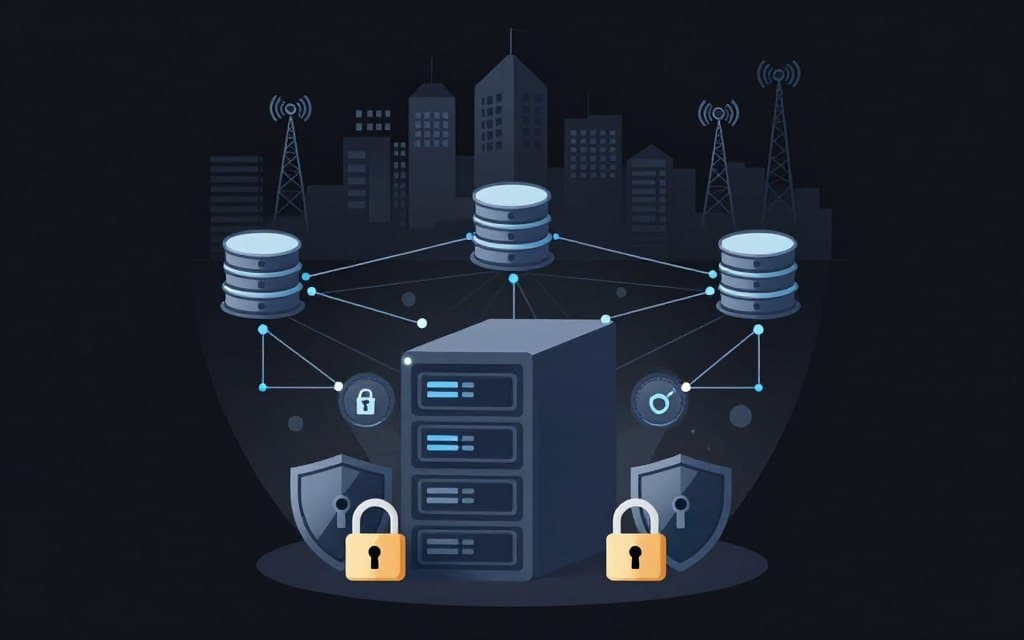
Each insecure sensor is a potential entry point for sophisticated attacks. Your core database systems become prime targets.
There’s a paradox here. Enhanced encryption is built into the network’s framework. Yet, your database doesn’t automatically inherit these protections.
You need deliberate integration strategies to leverage these security features. Real-time monitoring can now detect threats in milliseconds, not minutes.
Effective data management requires strict, policy-based control over every connection. This is non-negotiable for mitigating serious risks.
Your security systems must also scale to process massive data volumes instantly. They must identify anomalous patterns before operations are compromised.
Leveraging Cloud and Edge Innovations for Resilient Data Storage
Cloud and edge aren’t just buzzwords; they’re the foundational pillars for modern data handling. You need a dual-layer architecture that’s both scalable and lightning-fast. This approach builds the resilience your operations demand.
Cloud-Based Data Layers for Scalability
A distributed cloud data layer is essential. It lets your platform scale horizontally without massive capital investment. You avoid the cost and complexity of endless on-premises hardware.
This architecture processes diverse data from multiple sources simultaneously. It simplifies your overall data management while supporting the continuous delivery your applications need. You achieve better performance and cost optimization right away.
Edge Computing to Reduce Latency
Edge computing processes information closer to where it’s generated. Think factory floors, vehicle sensors, or retail kiosks. This slashes round-trip times from milliseconds down to microseconds.
That latency reduction is critical for real-time use cases. Autonomous vehicles make safety decisions instantly. Healthcare monitors trigger immediate alerts.
Your edge devices also filter data locally. They send only relevant insights to your central cloud. This dramatically cuts your bandwidth costs and network strain.
Together, cloud and edge create a complete solution. Your infrastructure handles the 100x traffic capacity while staying responsive. Flash-based storage at the edge accommodates this intense processing, future-proofing your entire system.
Innovative Tools and Analytics to Boost Database Management
The next wave of database innovation is driven by smarter analytics. Your management strategy must evolve from manual oversight to intelligent automation. Modern technology delivers this shift.
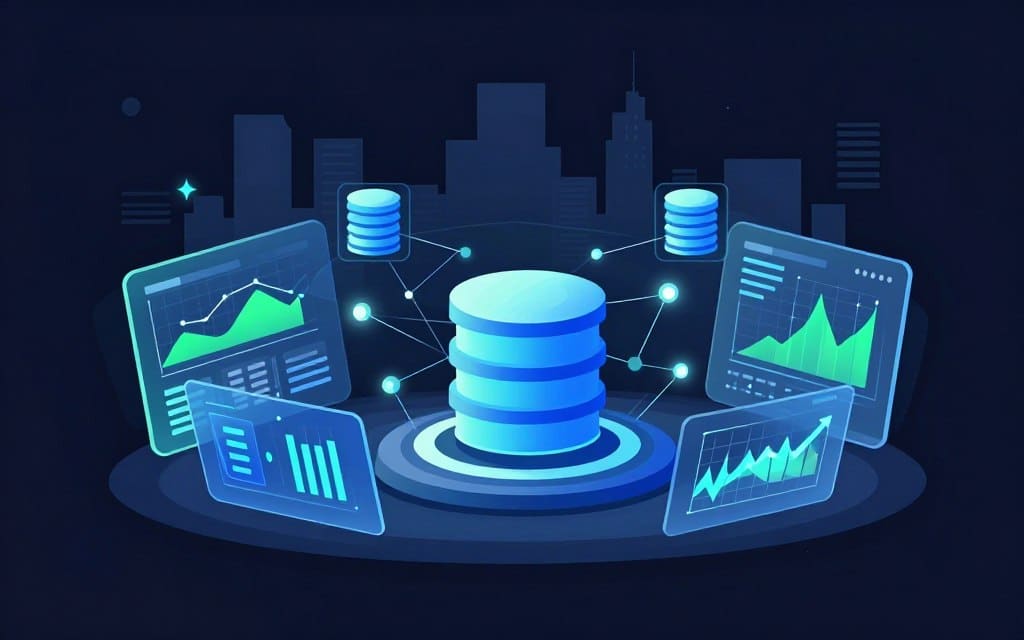
Automated Monitoring with AI-Driven Insights
Your monitoring tools now predict problems before they occur. AI-driven insights analyze billions of transactions in real-time. They pinpoint inefficient queries and resource conflicts instantly.
You get cross-platform visibility across SQL, NoSQL, and cloud-native systems. This unified view is essential for complex environments. It transforms your approach from reactive firefighting to proactive optimization.
Optimizing Performance for Operational Efficiency
These tools connect database performance directly to your cloud spend. You see exactly which workloads drive costs. That’s a powerful FinOps insight for cutting waste.
Automated scaling adjusts resources based on live demand. Your systems stay stable during traffic spikes without over-provisioning. This boosts overall operational efficiency dramatically.
Ultimately, this innovation turns raw information into a strategic asset. You gain measurable improvements in customer experience and business results.
Transforming Enterprise Operations with 5G-Powered Databases
Forget incremental upgrades—this is about unlocking entirely new ways to create value and serve customers. The fusion of ultra-responsive networks and robust data platforms enables business models that were previously impossible.
Enabling New Revenue Streams and Connected Devices
Healthcare organizations are a prime example. Surgeons now perform remote procedures with zero-latency video feeds, accessing patient records instantly from distributed systems.
Continuous monitoring via wearable IoT devices creates entirely new preventative care services. This directly improves patient outcomes and opens fresh revenue streams.
Connected vehicles represent another massive frontier. Each car is a data-generating device that needs robust network communications for autonomous features and real-time navigation.
Smart factories leverage this performance to transform manufacturing. Your production lines respond to quality issues instantly and predict maintenance before failures occur.
Meanwhile, media businesses create immersive AR and VR experiences. These services demand high-resolution, real-time content delivery that older networks couldn’t support.
| Industry | Pre-5G Limitation | 5G-Powered Opportunity |
|---|---|---|
| Healthcare | Delayed remote monitoring, limited telemedicine | Real-time remote surgery, continuous patient data streams |
| Automotive | Basic connectivity, delayed software updates | Autonomous driving AI, live infotainment, V2X communication |
| Manufacturing | Isolated machines, batch quality checks | IoT-driven predictive maintenance, dynamic line optimization |
| Media & Entertainment | Buffering, low-resolution streams | Metaverse experiences, ultra-HD live event streaming |
Your customer experience improves when backend systems handle billions of daily transactions smoothly. Enterprise organizations that optimize now will capture these growth opportunities.
They’ll leave competitors struggling with legacy system challenges. The real innovation is strategic, yielding services and efficiencies others can’t match.
Reflections on Advancing Database Strategies in the 5G Era
We’re at an inflection point where data processing capabilities define business leadership. Your database management is no longer a back-end utility—it’s a strategic asset driving customer experience and market position.
The challenges are significant and have a real impact on operations. You face expanded security risks, massive bandwidth demands, and complex edge-cloud integration. Modern solutions like AI-driven management tools and distributed architectures directly address these demands.
Enterprises that modernize their information systems now will seize growth opportunities and avoid costly legacy pitfalls. They’ll turn high-speed connectivity into new services and a tangible competitive edge.
True integration requires rethinking storage, enforcing robust security frameworks, and optimizing for low latency through edge computing. It’s a continuous commitment to innovation and modern technology across your entire infrastructure.
Move forward decisively. Evolve your database strategy to proactively balance performance, security, and operational efficiency. Your future business growth depends on it.