

Your sensors are talking—constantly. They’re generating more information than traditional storage solutions can handle, creating a data deluge that demands a smarter approach.
These connected devices produce high-volume, time-stamped information that arrives in unpredictable bursts. Standard database management tools weren’t built for this reality. They buckle under the pressure of real-time streams from thousands of sources.
The right architecture determines whether your application delivers immediate insights or collapses. You need a system that handles massive data ingestion while processing information at the edge and in the cloud.
Specialized storage solutions scale as your device network grows, turning complexity into actionable intelligence. This guide cuts through the hype to show you what actually works—from entity structures to security protocols.
We’ll help you build foundations that keep pace with relentless data streams, protecting your investment while unlocking the true potential of your connected ecosystem.
Understanding the IoT Ecosystem and Its Data Challenges
The flood of information from your connected devices isn’t just big—it’s fundamentally different. This isn’t occasional data entry; it’s a relentless, time-stamped stream.
Your sensor data arrives every second from thousands of sources. Think temperature readings, pressure levels, or motion detection.
Traditional storage buckles under this pressure. You need a system built for continuous ingestion.
Key Characteristics of Sensor and Time-Series Data
Every piece of IoT data carries a timestamp. You’ll query by time ranges more than any other dimension.
The structure varies wildly. One device sends simple numbers, while another transmits complex JSON objects.
This high-volume, time-series nature creates unique storage and time-series databases requirements. Performance hinges on handling these streams.
Real-World IoT Device Interactions
Your devices don’t operate in a vacuum. A smart thermostat logs adjustments and communicates with other units.
Industrial IoT devices generate high-cardinality data. This includes unique IDs, sensor types, and production line info.
Poor choices cause data backlogs. Readings pile up, creating critical delays in alerts and analytics.
You need sub-second query responses for real-time dashboards. The system must compress data efficiently to control costs.
Core Considerations in Database Architecture for IoT
Your architecture’s foundation determines whether your system thrives or stalls under pressure. Scalability isn’t an afterthought—it’s a primary requirement.
Your network might grow from 100 to 10,000 devices in a year. Your database must handle this exponential growth seamlessly.
You’ll face two scaling challenges. Vertical scaling adds power to existing servers. Horizontal scaling distributes data across multiple machines for resilience.
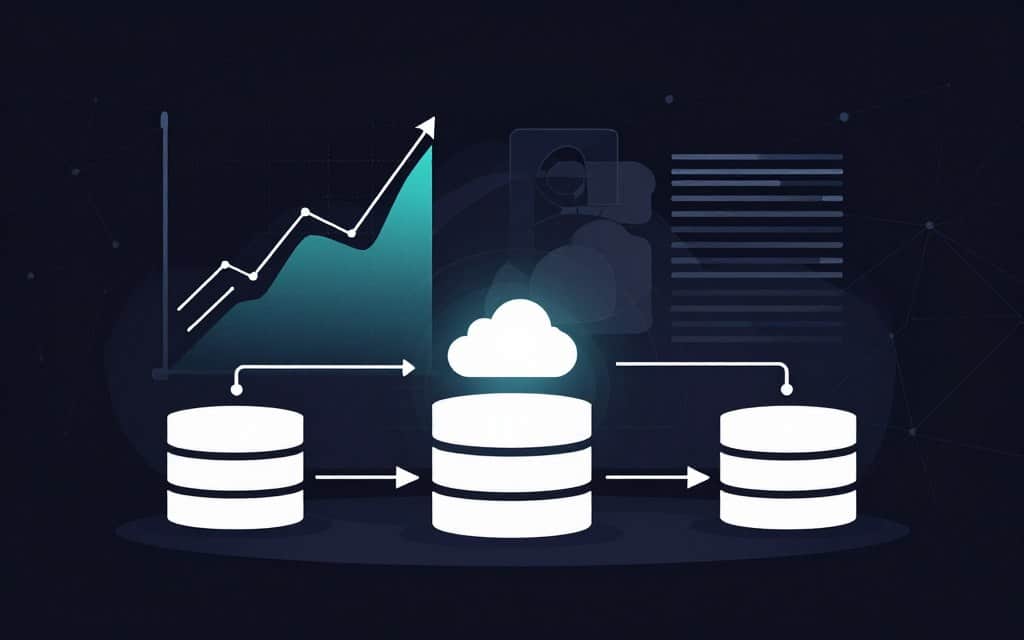
Performance metrics are critical. Measure your system by its data ingestion rate and query speed. Real-time processing demands millisecond responses.
You can’t wait for batch jobs when a sensor detects an anomaly. Decisions must happen instantly.
Data integrity ensures every reading arrives intact from edge to cloud. Loss or corruption during transmission breaks trust in your application.
Security considerations multiply. You’re protecting thousands of entry points across distributed devices, not just a central storage repository.
Storage efficiency dictates long-term costs. Without proper compression, terabytes can balloon into petabytes.
Your architecture must balance edge computing for low latency with cloud power for deep analytics. Establish smart retention policies to automatically manage data lifecycle.
Practical Techniques for Designing Databases for IoT Systems
Your connected ecosystem demands more than just architecture; it requires battle-tested operational strategies. How do you translate concepts into reliable performance?
Establishing Scalability and Real-Time Processing
Start with horizontal scaling through data partitioning. Divide your time-series information into daily or weekly chunks. This prevents bottlenecks when handling 10,000+ data points per second.
Real-time processing needs in-memory operations at the edge. You can’t send every reading to the cloud and expect instant responses. Load balancers distribute streams across multiple servers for consistent performance.
Implementing Data Partitioning and Efficient Query Strategies
Create indexes on device IDs and timestamps. You’ll filter by these fields in nearly every analytics query. This optimization cuts response times from seconds to milliseconds.
Set up continuous aggregations that pre-calculate daily averages and min/max values. Dashboard queries return instantly instead of scanning millions of rows. Automatic downsampling keeps minute-by-minute data for 30 days, hourly aggregates for a year.
Ensuring Data Integrity and Security
Validate sensor readings at ingestion against expected ranges. Catch corrupted values immediately before they pollute your analytics. Implement 90-day retention policies for high-frequency data.
Security starts with encryption—protect information at rest and in transit. Use role-based access control to limit who can read sensor data or modify configurations. Monitor write throughput constantly; your system must sustain 15,000+ writes per second to handle traffic spikes.
Exploring Database Models: SQL, NoSQL, and Time-Series Options
The database landscape offers three main paths: the structured reliability of SQL, the flexible adaptability of NoSQL, and the time-optimized efficiency of time-series options. Each model serves distinct purposes in your connected environment.
SQL databases like PostgreSQL bring decades of proven stability. They excel at managing device metadata and user accounts with familiar query syntax. Foreign keys automatically enforce data integrity between devices and locations.
But traditional relational databases weren’t built for millions of sensor readings per hour. They’ll struggle with high-velocity data streams without specialized extensions.
NoSQL databases offer flexibility for evolving data structures. Document stores like MongoDB handle varying sensor attributes without rigid schemas. Key-value solutions like Redis deliver sub-millisecond lookups for real-time dashboards.
Graph databases shine when mapping complex device relationships. They analyze how information flows between interconnected nodes in your network.
Time-series databases are purpose-built for temporal data. TimescaleDB combines PostgreSQL’s reliability with specialized optimizations—achieving 95% compression and 1,000x faster query speeds. InfluxDB offers straightforward setup for basic monitoring use cases.
Most successful projects use hybrid approaches. Combine time-series databases for sensor streams with SQL for configuration data and Redis for real-time caching. This multi-model strategy delivers optimal performance across different data types.
Integrating Cloud and Edge (Fog) Computing for Optimal Performance
The physical distance between your sensors and data centers creates critical performance decisions. You need a strategy that handles both immediate reactions and long-term analysis.
Your architecture requires three layers working together. Sensors generate raw information, edge servers process it locally, and cloud data centers provide permanent storage.
Leveraging Cloud Scalability and Cost Efficiency
Cloud databases offer unlimited growth potential. You pay only for the storage you actually use—no upfront hardware investments.
Platforms like AWS and Azure handle backups and updates automatically. This managed approach reduces your operational burden significantly.
Use VPC peering to create secure connections. This keeps your data isolated from public internet traffic while maintaining accessibility.
Utilizing Fog Computing for Reduced Latency
Edge computing processes information near the source. When a factory sensor detects overheating, you need milliseconds—not cloud round-trips.
Lightweight database solutions at the edge sync with your central cloud. They maintain consistency even with intermittent connectivity.
This approach reduces bandwidth costs dramatically. Local filtering and aggregation send only summary data to the cloud for deep analytics.
Industrial implementations show the power of this balance. Immediate alerts happen at the edge while trend analysis occurs in the cloud.
Enhancing Security, Retention, and Analytical Capabilities
Your protection strategy needs layers—like an onion. Start with robust encryption for all your information. Use AES-256 for data at rest and TLS 1.3 in transit. This shields your sensor data from interception.
Control access with granular precision. Implement role-based permissions where operators view dashboards, engineers adjust configurations, and only administrators can delete historical records. This principle of least privilege is a critical security best practice.
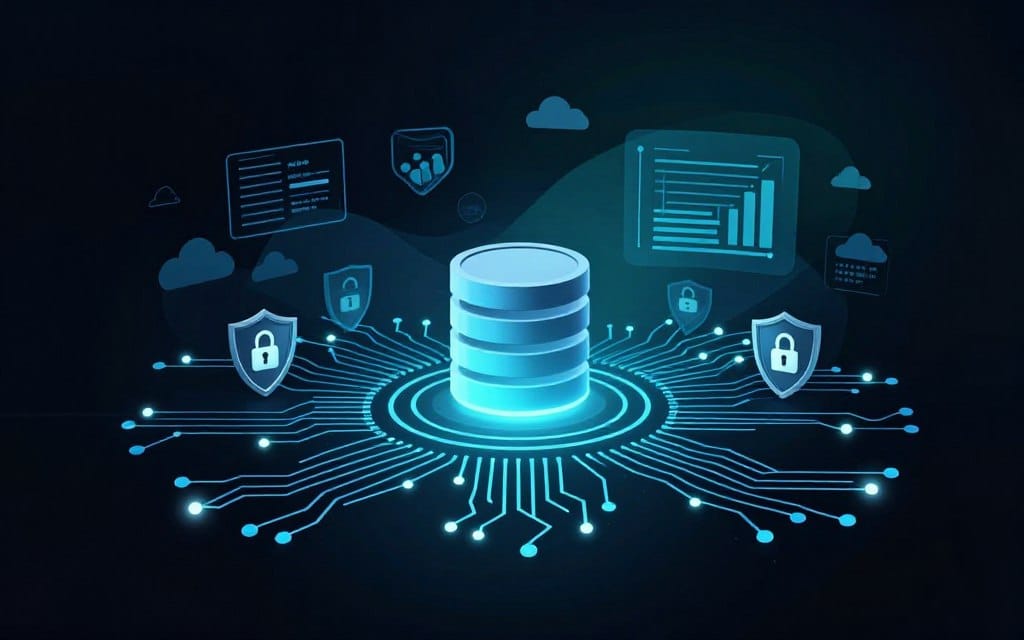
Automate your data retention policies. Set rules to delete raw sensor data after 90 days. Preserve downsampled aggregates for years of historical analysis. This approach frees up space and optimizes long-term storage costs.
Prepare for the unexpected with point-in-time recovery. Solutions like TimescaleDB let you restore your database to any moment. This protects against accidental deletions or corruption from faulty devices.
Build powerful analytics directly into your system. Leverage built-in functions for time-series operations. Gap-filling handles missing readings, and interpolation estimates values between points.
Create real-time dashboards that update automatically. Continuous aggregations mean your queries return instant insights without manual refreshes. Connect visualization tools like Grafana directly to your database for live status and trend displays.
These features turn raw IoT data into actionable intelligence. They are essential for building secure, efficient, and insightful connected applications.
Final Thoughts on Building a Robust IoT Database Strategy
Before you commit to any single approach, remember that hybrid solutions often deliver superior results. Combine different database types to leverage their unique strengths—time-series databases for sensor streams, relational systems for device metadata.
Test with real data before finalizing your model. Run benchmarks using actual sensor volumes from your specific IoT applications. This prevents costly re-architecture later.
Your team’s expertise matters as much as technical features. A familiar database your team masters outperforms a “perfect” solution they struggle with.
Start small with a pilot deployment. Scale gradually as you identify bottlenecks. This approach builds confidence while minimizing risk.
You now have the framework for databases that handle millions of points. They deliver real-time analytics and grow with your network. Your connected ecosystem’s success depends on these strategic data foundations.