

Your next B2B application almost certainly needs a multi-tenant architecture. This means keeping every customer’s information completely separate and secure.
The choices you make about your data structure now will either fuel rapid growth or create a technical mess that’s incredibly costly to fix later. This isn’t just theory—it’s the foundation your entire business will run on.
We’re cutting through the complexity to show you exactly how to build a system that scales from your first user to millions. Forget abstract frameworks; we focus on proven patterns and real-world trade-offs.
You’ll learn when to share resources and when to demand dedicated isolation. We’ll break down how to balance cost against performance. Modern technologies like cloud-native solutions and serverless architectures make this easier than ever.
Whether you’re managing ten clients or planning for a hundred thousand, the right approach protects your data and optimizes resources. It sets your entire system up for sustainable, long-term growth.
Getting to market quickly matters. But building on a solid foundation matters more. Let’s get your data design right from the very start.
Understanding Multi-Tenancy and Schema Design
Before diving into technical implementations, you need to grasp the core concepts that make multi-tenant systems work. Getting these fundamentals right determines whether your architecture will scale smoothly or become a maintenance nightmare.
Defining Tenants, Isolation, and Shared Resources
Think of each customer organization as a separate tenant in your system. This group of users shares access but requires complete data separation from other customers.
Isolation is non-negotiable—it ensures one tenant can never access another’s information, whether accidentally or intentionally. Meanwhile, shared resources let you consolidate infrastructure instead of running duplicate systems for every customer.
This balance between separation and efficiency is where the real optimization happens. You cut costs while maintaining security.
Levels of Multi-Tenancy: Data, Schema, and Application
Multi-tenancy operates at three distinct levels, each with different trade-offs. Your choice here shapes your entire architecture approach.
At the data level, each tenant gets their own dedicated database or schema. This provides maximum separation but comes with higher resource overhead.
Schema-level multi-tenancy means multiple tenants share one database, but each maintains separate table structures. Application-level keeps everything shared—same instance, same database—with only configuration options differentiating tenants.
The level you select determines your isolation guarantees, operational complexity, and scaling capabilities. Choose wisely based on your specific needs.
Assessing Business Needs and Technical Requirements
Your system’s foundation depends on accurately assessing both business objectives and technical constraints. This evaluation phase determines whether your architecture will support rapid growth or create costly bottlenecks.
Evaluating Security, Compliance, and Performance Priorities
Security requirements should drive your initial decisions. Are you handling healthcare data under HIPAA or financial records under SOX? Each regulation demands specific isolation levels.
Performance considerations are equally critical. Will you serve a few high-volume enterprise customers or thousands of smaller ones? Your tenant profile shapes everything.
Consider customization needs early. Do your customers require unique data structures, or can they use standardized tables? This affects long-term flexibility.
| Tenant Scenario | Security Focus | Performance Needs | Cost Considerations |
|---|---|---|---|
| 10 Enterprise Clients | Maximum isolation | High throughput | Higher initial investment |
| 1,000 SMB Customers | Standard protection | Variable workload | Operational efficiency |
| 10,000 Individual Users | Basic separation | Consistent performance | Scalability priority |
Balance is essential. You’re optimizing for security without sacrificing performance. Scaling efficiently without exploding costs requires careful planning from day one.
Your technical requirements around backup and recovery grow exponentially with each additional tenant. Plan for this complexity upfront to avoid painful retrofitting later.
Key Considerations for Designing Multi-Tenant Database Schemas
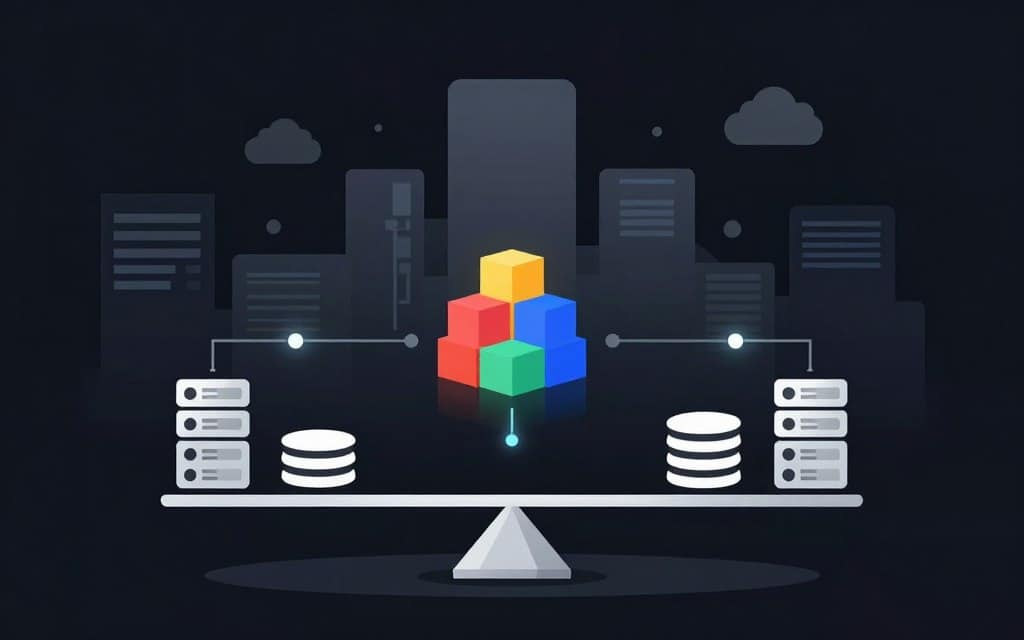
The real challenge emerges when you face competing priorities that pull your architecture in different directions. You want maximum security but also need to control expenses. You demand flexibility but can’t afford operational chaos.
Balancing Isolation, Scalability, and Customization
Think about your tenant profile. Are you serving ten enterprise clients or thousands of small businesses? This determines your priorities.
Maximum data separation sounds ideal. But managing hundreds of separate systems triples your operational overhead. Shared resources cut costs dramatically. Yet one noisy neighbor can impact everyone’s performance.
How much customization do your clients really need? Standardized SaaS products require less flexibility than platforms serving diverse industries. Each choice carries trade-offs.
| Approach | Isolation Level | Scalability Potential | Customization Options | Management Complexity |
|---|---|---|---|---|
| Separate Databases | Maximum security | Resource-intensive | Full flexibility | High overhead |
| Shared Schema | Basic separation | Highly scalable | Limited changes | Simpler operations |
| Hybrid Model | Balanced protection | Moderate growth | Selective options | Medium effort |
The sweet spot balances strong tenant isolation with sustainable growth. It allows reasonable customization without creating architectural chaos. Your system should scale from dozens to millions of users smoothly.
Remember: you can’t optimize for everything at once. Choose trade-offs that align with your business priorities. What matters most—absolute security, massive scale, or operational simplicity?
Evaluating Core Design Patterns and Trade-Offs
Your choice of a data architecture pattern locks in your system’s capabilities—and its limitations—for years to come. You face a fundamental choice between simplicity, security, and scalability.
Each model offers a distinct balance. The right one depends entirely on your tenant count and their specific needs.
Shared Database, Shared Schema vs. Separate Databases
The shared database, shared schema pattern is the simplest to manage. All your customers coexist in one logical space.
This approach is highly cost-effective. However, it provides the weakest data isolation. Customization for individual clients is very difficult.
At the other extreme, the separate databases pattern gives each tenant a dedicated instance. This delivers maximum security and isolation.
The trade-off is significant operational overhead and cost, especially as you scale. Managing hundreds of individual systems can become a nightmare.
A middle path uses a shared database but separate schemas per tenant. This improves isolation and allows for some customization. It also increases management complexity compared to a fully shared model.
Hybrid Approaches and Their Complexity
A hybrid model combines these patterns strategically. You might place high-value enterprise clients on isolated systems while grouping smaller tenants in shared ones.
This approach optimizes cost and performance based on client profile. It offers excellent flexibility.
The downside? You now maintain multiple architectural patterns at once. This demands sophisticated routing logic and can complicate your operations significantly.
Your selection isn’t just theoretical. Planning for ten tenants? Separate databases might work. Targeting ten thousand? A shared schema or hybrid model is likely necessary.
Ensuring Security and Data Isolation in Multi-Tenant Environments
When multiple customers share your system, one vulnerability can compromise everyone—your security measures must be ironclad from day one. You’re protecting sensitive information across different organizations simultaneously.
Implementing Data Encryption and Access Controls
Encrypt everything—both stored information and data moving between systems. Use AES algorithms with secure key management. Lose control of your keys and you’ve lost everything.
Access controls determine who sees what. Implement role-based access so users only get permissions their job requires. Row-level security restricts data rows based on user identity.
Column-level security hides sensitive fields from unauthorized eyes. Your controls must enforce strict boundaries at every level.
Auditing, Logging, and Regulatory Compliance
Create immutable records of every database activity. Track who accessed what data and when. This audit trail isn’t just for security—it’s essential for HIPAA, GDPR, and SOX compliance.
Follow best practices like HTTPS connections and least privilege access. Patch systems regularly and monitor continuously for anomalies. Encrypt backups along with production data.
| Security Measure | Implementation Level | Isolation Impact | Compliance Value |
|---|---|---|---|
| Data Encryption | System-wide | High protection | Essential requirement |
| Role-Based Access | User level | Precise control | Audit trail support |
| Row-Level Security | Data level | Granular isolation | Regulatory compliance |
| Activity Logging | Operational | Monitoring capability | Legal protection |
Your multi-tenant database design principles must prioritize these security features. They protect your customers and your reputation simultaneously.
Optimizing Performance and Scalability in Database Design
Slow performance isn’t just annoying—it’s a business killer that drives customers away faster than you can diagnose the problem. When response times lag, user satisfaction plummets immediately.
Your system’s ability to handle growth depends entirely on how you optimize operations from day one. This isn’t optional—it’s essential for sustainable scaling.
Techniques for Query Optimization and Indexing
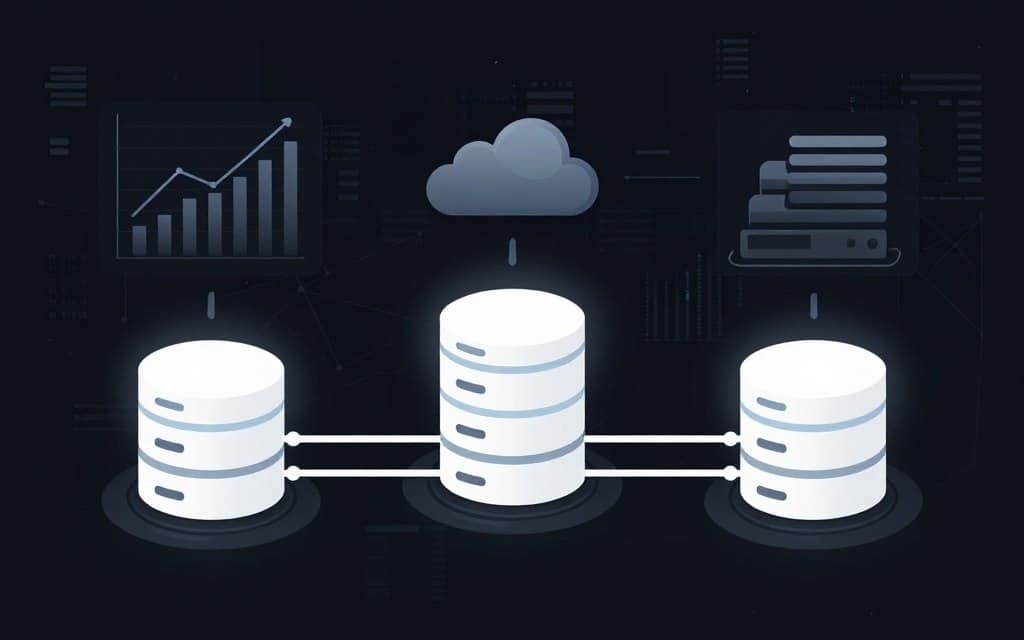
Caching mechanisms like Redis or Memcached can reduce database load by 60-80% for read-heavy workloads. They intercept repeated queries and serve results from memory instead of hitting storage every time.
Indexing is non-negotiable for good performance. Create indexes on every column used in WHERE clauses, JOIN operations, and ORDER BY statements. Without proper indexes, your system performs full table scans that get exponentially slower.
Query optimization means writing efficient SQL. Avoid SELECT * statements that transfer unnecessary data. Reduce complex joins and leverage database-specific features. Connection pooling reuses database connections instead of establishing new ones for every request.
For scalability, consider sharding to split your database horizontally across multiple servers. Partitioning divides tables into smaller chunks based on tenant ID or date ranges. Elastic scaling with cloud services lets you adjust resources based on actual usage patterns.
| Optimization Technique | Performance Impact | Scalability Benefit | Implementation Complexity |
|---|---|---|---|
| Caching Layer | 60-80% load reduction | High read scalability | Low to medium |
| Strategic Indexing | 10x query speed | Better resource usage | Medium |
| Query Optimization | 30-50% improvement | Efficient data transfer | High (requires expertise) |
| Connection Pooling | Reduced overhead | Higher throughput | Low |
Performance monitoring should track both aggregate metrics and per-tenant analytics. This helps identify which customers drive load so you can optimize accordingly. Following solid multi-tenant database design principles ensures your optimization efforts deliver maximum impact.
Leveraging Modern Technologies for Multi-Tenant Solutions
Today’s cutting-edge technologies eliminate the traditional trade-offs between security, performance, and operational efficiency in customer data systems. You no longer need to choose between robust isolation and manageable overhead.
Modern platforms provide game-changing capabilities that make robust customer isolation accessible without massive infrastructure investments. The cloud revolution has transformed complex architectural challenges into streamlined solutions.
Utilizing Cloud-Native, Containerization, and Serverless Options
Cloud-native platforms like AWS RDS, Azure SQL Database, and Google Cloud SQL offer isolated instances for each customer with automatic scaling. These managed services handle backups, patching, and monitoring—reducing your operational burden significantly.
Containerization with Docker creates portable environments that run identically across development and production. Kubernetes orchestrates these containers at scale, automatically spinning up new customer databases and balancing loads.
Serverless architectures like AWS Aurora Serverless eliminate capacity planning entirely. Your system scales compute resources based on actual demand, and you pay only for what you use. This is ideal for customers with unpredictable workloads.
AI and machine learning now optimize performance by analyzing usage patterns and predicting demand spikes. Edge computing reduces latency for global applications while maintaining centralized security controls.
Enhanced security features provide next-generation protection for sensitive customer information. These modern approaches deliver the isolation you need with the scalability your business demands.
Practical Steps for Managing Multi-Tenant Databases
Effective management of customer data systems demands clear procedures that scale with your business growth. You need reliable methods that work whether you’re handling ten clients or ten thousand.
Identifying Tenants and Partitioning Data Effectively
Start by establishing rock-solid tenant identification. Use unique subdomains, API tokens, or session cookies to track which customer each request represents.
Partition your information strategically. Horizontal splitting separates each tenant’s rows into distinct storage areas. Vertical division creates specialized tables for different data types.
This approach minimizes overhead while maintaining clean separation. Your queries run faster when each tenant’s data stays organized.
Migrating Schemas and Maintaining Operational Efficiency
Schema changes require careful coordination across all customer environments. You can’t afford downtime when updating hundreds of systems simultaneously.
Use connection pooling to reduce overhead by 40-60%. Implement strategic indexing on columns used in WHERE clauses and JOIN operations.
For PostgreSQL users, the Citus extension offers transparent sharding. It tracks which tenants execute specific queries and isolates high-value customers to dedicated nodes.
Automate repetitive tasks like migrations and performance monitoring. This ensures consistent operations as your number of tenants grows.
Wrapping Up Insights and Future Directions
The path forward isn’t about finding a perfect solution—it’s about selecting the right approach for your specific business context and growth trajectory. Your choice of isolation model directly impacts scalability, security, and operational efficiency.
Shared database patterns offer simplicity for standardized customer needs. Separate database approaches provide maximum security for sensitive data. Hybrid models let you strategically segment premium clients from others.
Modern technologies continue to evolve this landscape. Cloud-native solutions and AI-driven optimization make robust tenant isolation more accessible than ever. Your application foundation can now support both current requirements and future expansion with confidence.
Start with a pattern matching your scale, then evolve as you grow. The knowledge you’ve gained empowers you to build systems that serve customers efficiently and securely—turning architectural complexity into competitive advantage.