

Are you making decisions based on gut feeling or fragmented reports? In today’s market, that’s a dangerous game. You need accurate, timely, and actionable insights to win.
Business intelligence platforms turn raw numbers into clear reports and dashboards. But their power is locked away if your information lives in separate silos. How do you bridge the gap?
Without a unified strategy, you’re working with a broken picture. Departments clash over different numbers. Opportunities vanish because you spotted them too late. This fragmentation directly hits your revenue.
The solution is consolidation. Modern businesses use advanced platforms to pull from various sources—cloud, SQL, data lakes. This creates a single source of truth everyone can trust.
Mastering these data management strategies does two things. It protects your infrastructure from security gaps. And it empowers your team to act with confidence using real-time analytics. For a deeper dive into unifying master data, consider the principles of integrating MDM with BI systems.
Key Takeaways
- Timely, accurate insights are non-negotiable for modern business decisions.
- Business intelligence tools require seamless data consolidation to deliver value.
- Fragmented data leads to operational inefficiency and lost revenue opportunities.
- A unified data platform creates a single, trusted source of truth for all departments.
- Effective integration strengthens security while enabling confident, data-driven action.
- Real-time analytics and dashboards depend on the quality of your underlying data connections.
Understanding the Business Intelligence Landscape
Your competitors are leveraging advanced analytics; are you keeping pace with the intelligence landscape? This ecosystem is no longer just about static reports. It’s a dynamic environment where information fuels every strategic move.
Modern platforms empower everyone. From executives to marketing teams, intuitive interfaces make complex data analysis accessible.
Key Trends in Data Analytics
Automation and artificial intelligence lead the charge. These capabilities process vast information sets instantly. They uncover patterns humans might miss.
Real-time access is now standard. Decisions can’t wait for weekly summaries. Live dashboards provide a constant pulse on operations.
| Trend | Description | Business Impact |
|---|---|---|
| Automated Reporting | Systems generate scheduled insights without manual effort. | Frees team time for analysis, not compilation. |
| AI-Powered Analytics | Algorithms predict outcomes and suggest actions. | Improves forecast accuracy and identifies opportunities. |
| Real-Time Dashboards | Live visualizations update with incoming information streams. | Enables immediate response to market shifts. |
| Cloud Collaboration | Teams access and edit shared analytics from anywhere. | Breaks down departmental silos for unified strategy. |
The Role of BI Tools in Modern Organizations
These platforms serve as the central nervous system. They translate raw numbers into clear, actionable insights. This empowers confident choices at all levels.
Seamless workflow is critical. Embedding analytics into daily applications removes friction. Your team collaborates effectively, using a single source of truth.
Cloud-based solutions offer scalability and reach. They ensure vital information is accessible to those who need it, fostering a truly data-driven culture.
Data Consolidation and Unified Data Repositories
Operational blind spots often stem from a simple root cause: scattered information. Your sales, finance, and marketing teams likely use different systems—CRM platforms, ERP tools, cloud storage. This creates isolated data silos.
Consolidation is the process of bringing this information together into a single repository. It’s the foundation for clear visibility.
Benefits of a Centralized Data Warehouse
A centralized data warehouse breaks down these walls. It provides a unified view of operations for all business users. Your analytics team gets streamlined access to everything they need.
Leading platforms like Snowflake, Google BigQuery, and Amazon Redshift are built for this. They consolidate diverse data from various sources into one accessible location.
You eliminate the silos that hide your true performance. This creates a single source of truth, a core goal of master data management (MDM) principles. Your organization can finally see the full picture.
Optimizing ETL Processes for Data Quality
Your reports are only as reliable as the pipeline that feeds them. ETL—extract, transform, load—is that critical pipeline. It pulls raw information from various sources and shapes it into a consistent format.
Best Practices for Data Extraction and Transformation
Start by mapping all your sources. Define clear rules for data transformation to handle missing values and standardize formats. This cleansing step is non-negotiable for quality.
Consistency here ensures your analytics reflect true operations. It prevents flawed insights from reaching decision-makers.
Automating ETL Workflows with Leading Tools
Manual processes are slow and error-prone. Automate your pipelines with platforms like Apache NiFi, Talend, or Microsoft SQL Server Integration Services (SSIS).
These solutions manage complex workflows across cloud and on-premises systems. They ensure data moves smoothly from origin to your data warehouse.
Automation speeds up the entire flow. It minimizes human error and frees your team for higher-level data analysis. Your dashboards update with trustworthy, real-time information.
database integration with BI tools
Merging information from SaaS apps, internal servers, and cloud storage feels like a puzzle. You need every piece connected to see the full picture for your reports.
Strategies to Merge Disparate Data Sources
Two modern approaches solve this. They connect your systems without creating costly, slow copies.
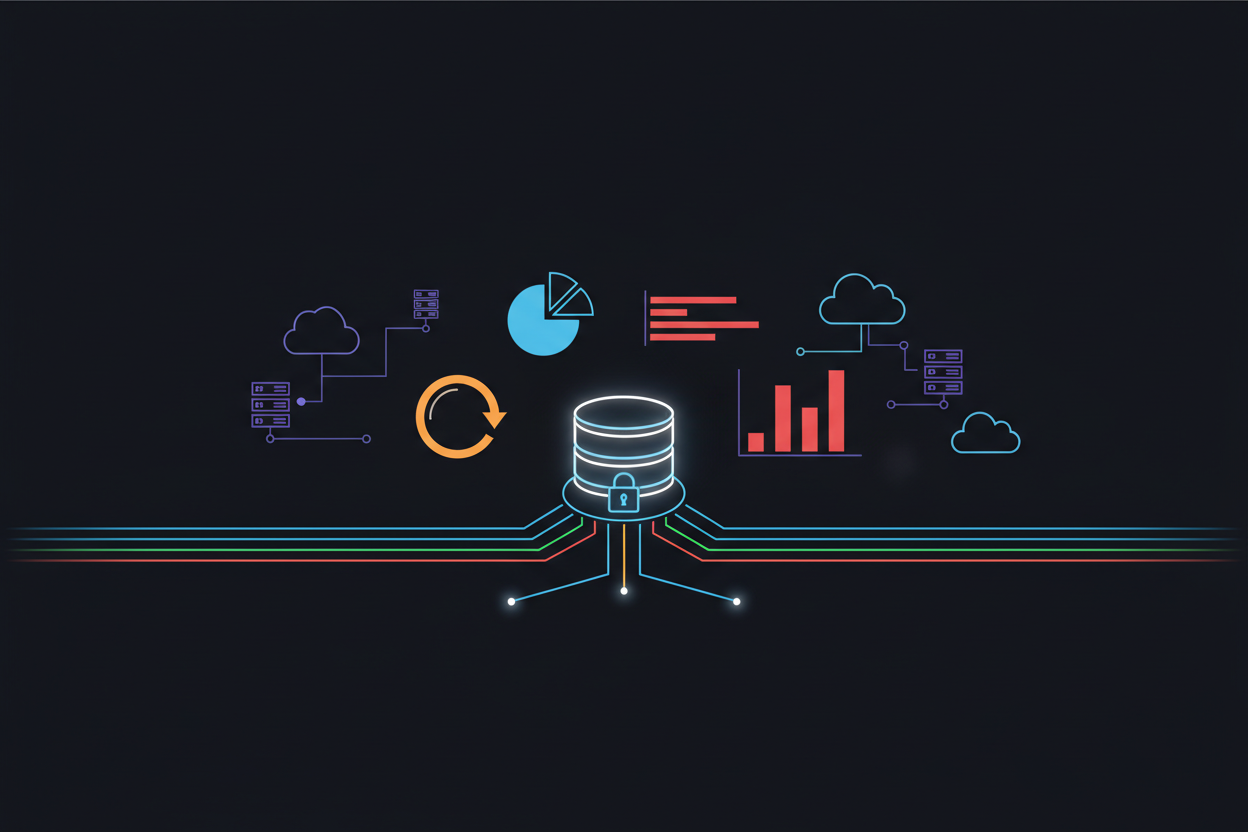
Data virtualization creates a real-time layer. It aggregates data from different sources without moving it. This provides live business intelligence.
Platforms like Denodo or Cisco Data Virtualization enable this. You get instant real-time data access. This cuts storage costs and boosts report speed dramatically.
API-driven integration is the other key strategy. It automates the exchange between various platforms. This is perfect for connecting SaaS services.
Tools like MuleSoft and Zapier handle this automation. They link third-party services such as Salesforce and HubSpot. Your integration with external systems becomes seamless.
| Strategy | Primary Use Case | Key Benefit |
|---|---|---|
| Data Virtualization | Unifying live data from legacy systems, SQL databases, and data lakes. | Provides immediate access for business intelligence without data duplication. |
| API Integration | Connecting cloud-based SaaS applications and external services. | Enables automated, real-time data flow between systems. |
Together, these methods feed your BI dashboards. They enable powerful analytics and actionable insights. Your team makes faster, more confident decisions.
API-Driven Integration for Real-Time Insights
Static reports can’t keep up with a market that moves in seconds—what you need is a live connection to your information. API-driven connectivity builds that bridge. It allows your different software systems to communicate and share data instantly.
Implementing Secure API Connectors
Security is non-negotiable when linking platforms. Modern solutions use industry-standard protocols. For example, platforms support JDBC and ODBC drivers.
These standards ensure secure, high-performance access. They let you connect popular analytics interfaces like Tableau and Power BI directly to your data.
Some platforms go further. They offer AI-powered conversational workspaces. Users can ask questions about their information in plain language for immediate insights.
This direct flow powers your dashboards with real-time data. It eliminates the lag of manual updates. Your team makes confident decisions based on the current state of your business.
| Connectivity Method | Primary Use | Key Advantage |
|---|---|---|
| API Integration | Linking cloud SaaS applications and external services. | Enables automated, real-time data exchange between systems. |
| Standard Driver (JDBC/ODBC) | Connecting SQL-based platforms to reporting tools. | Provides secure, standardized access for flexible reporting. |
This seamless integration is a core part of modern data management. It highlights the practical distinction between business intelligence and data management. The right connectors turn raw streams into actionable intelligence.
Cloud-Based Strategies for Scalable BI Solutions
Your on-premises servers are reliable, but can they adapt to a data surge overnight? Cloud-based strategies provide the elasticity traditional systems lack.
They offer the scalability, flexibility, and cost-effectiveness modern organizations need. Your business intelligence infrastructure can grow seamlessly with your demands.
Integrating On-Premises and Cloud Data Seamlessly
A hybrid approach blends local control with cloud power. You connect legacy systems to elastic services without disruption.
This creates a unified pipeline for all your information. Specialized platforms manage this complex flow.
| Platform | Primary Cloud | Key Automation Feature |
|---|---|---|
| Azure Data Factory | Microsoft Azure | Visual workflow designer for code-free pipeline creation. |
| AWS Glue | Amazon Web Services | Serverless architecture that scales automatically with job demands. |
| Google Cloud Data Fusion | Google Cloud | Fully managed service with a drag-and-drop interface. |
These tools ensure your data remains accessible and secure. They provide extensive integration with storage and processing power.
Cloud platforms also deliver advanced analytics and machine learning capabilities. This significantly enhances your applications for smarter insights.
To build a resilient foundation, learn how to master multi-cloud strategies effectively.
Data Governance, Security, and Master Data Management
Governance isn’t just a policy document; it’s your shield against data chaos. Without clear rules, your sensitive information is exposed. Conflicting numbers erode trust in every report.
This framework protects your most valuable asset: reliable data. It ensures compliance and builds a foundation for accurate business intelligence.
Establishing Robust Data Policies
Start by defining who can see and change what. Implement role-based access control and encryption for all sensitive records.
Platforms like Collibra or Alation help enforce these policies across your organizations. They automate compliance checks and create an audit trail.
This proactive security stance prevents breaches before they happen. It turns governance from a burden into a strategic advantage.
Maintaining Data Consistency Across Systems
Master Data Management (MDM) solves the inconsistency problem. It ensures customer and product records are identical everywhere.
Solutions like Informatica MDM or IBM InfoSphere create that single source of truth. They sync information across all your systems in real time.
Boost quality further with AI. Tools like DataRobot or IBM Watson Studio automate data transformation and spot anomalies. This automation delivers cleaner insights for smarter decisions.
Taking Action: Elevate Your BI Integration Strategy
Elevating your analytics from reactive reporting to proactive intelligence requires a decisive final step. The right strategies don’t just connect systems—they propel your entire organization forward.
Start by auditing your current information landscape. Identify where better connections can deliver immediate value. Embrace automation and cloud platforms to ensure consistent, timely insights.
This strategic approach turns raw data into a reliable engine for growth. It secures your infrastructure and empowers your team with accurate analytics. You gain a clear advantage in a competitive market.
Take action today. Build the seamless flow of intelligence that drives smarter decisions and fosters long-term success.