

Did you know your organization likely adds over 300 new services every month? This constant growth massively expands your digital attack surface.
Each new service can create a hidden opening. In fact, about 32% of new high or critical cloud exposures stem from these monthly additions.
Three categories of exposures account for a staggering 73% of high-risk threats. These include your core IT infrastructure, business operations apps, and remote access services.
Over 23% of these exposures involve critical security and IT infrastructure. This opens doors for opportunistic attackers exploiting simple weaknesses.
You can’t afford to react slowly. A formal, practiced process is no longer optional—it’s vital for your business to survive and protect sensitive information.
Defining the Scope and Objectives of Your Plan
Your first critical step isn’t buying tools—it’s defining the battlefield. You can’t afford ambiguity when an event occurs. A clear scope tells your team exactly what they’re defending.
This means mapping your vital assets. Which systems hold sensitive information? Who has access? Which business operations are mission-critical? Answering these questions locks down your strategy.
With these boundaries set, your crew can quickly evaluate any situation. They’ll know when to escalate and how to coordinate. This precision maintains stakeholder confidence during a crisis.
Your objectives should focus on rapid identification and containment. This clarity is the foundation for all subsequent action. It directly supports your effort to create a robust recovery plan for various scenarios.
Developing a Database Security Incident Response Plan
How do you transform reactive panic into a structured, repeatable process? Start with a proven framework. The NIST Incident Response Lifecycle gives you that essential structure.
It turns chaotic reactions into precise, phased actions. Align your entire strategy with this model. You’ll follow industry best practices from the first alert.
Your documentation must be crystal clear. Write instructions for every potential event your team might face. This turns guesswork into a reliable, step-by-step guide.
Leadership must review and approve this documentation annually. Threats evolve fast. Your framework needs to stay relevant to your current environment.
Define a formal review process from the start. Specify who owns its upkeep. This ensures your playbook never becomes outdated.
Always fold lessons from simulated exercises back into your documentation. This continuous improvement cycle strengthens your overall cybersecurity posture after every test.
| Plan Component | Review Frequency | Primary Owner |
|---|---|---|
| Core Response Procedures | Quarterly | Incident Lead |
| Tool & Contact Lists | Monthly | IT Coordinator |
| Full Plan & Governance | Annually | Management Team |
This disciplined approach builds a living, breathing strategy. It moves you from fragile to resilient, one documented step at a time.
Assembling and Empowering Your Incident Response Team
A plan is only as strong as the people who execute it. Your frontline crew must be ready to act before an event escalates. This group turns your strategy into decisive action.
Key Roles and Responsibilities
Start by designating a lead. This person oversees the core group and coordinates all efforts. They ensure every member understands their specific duties.
Your core team handles immediate threats. Maintain updated contact details for everyone involved. Clearly document these roles in your playbook for high-stress situations.
Empower them with authority to make critical decisions quickly. This avoids delays that could worsen an event.
Integrating Cross-Department Expertise
Don’t limit your group to IT. Integrate experts from legal, privacy, and security operations. They cover critical business aspects during a crisis.
You can also activate an extension team. Include human resources and marketing personnel when needed. This broader support helps manage organizational impact and public communication.
This blended approach ensures all angles are covered. It transforms a technical reaction into a coordinated business defense.
Documenting Critical Response Phases and Procedures
A clear map of critical phases prevents your team from freezing under pressure. Your documented procedures turn a high-stress event into a coordinated, repeatable process.
Mapping Out the NIST Lifecycle Phases
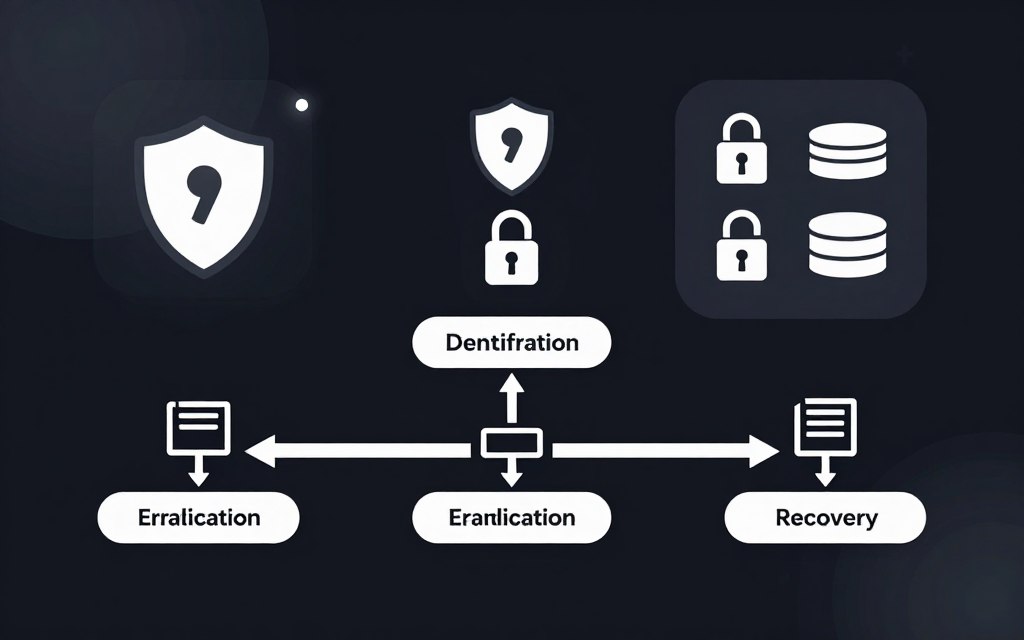
Follow the six-phase model: Preparation, Identification, Containment, Eradication, Recovery, and Lessons Learned. This framework guides every action from the first alert to the final review.
Your preparation sets the stage. The identification phase confirms if a breach happened. You’ll analyze when it occurred and who found it.
Streamlining Containment, Mitigation, and Recovery
Containment is vital. You must stop malware spread without ruining evidence. Next, eradicate the root cause to prevent a return.
Recovery means bringing systems back online. Monitor them closely for any suspicious activity. This ensures your operations return safely.
Integrating Cybersecurity Tools and Resources
Use specialized tools for analysis and restoration. They help your team act faster and more accurately. The right resources make your entire incident response effort stronger.
| Phase | Key Action | Primary Tool/Resource |
|---|---|---|
| Preparation | Policy development & training | Playbook & simulation platform |
| Identification | Log analysis & alert triage | SIEM system |
| Containment | Network segmentation | Firewall rules |
| Eradication | Malware removal | Endpoint detection & response (EDR) |
| Recovery | System restoration & validation | Backup & monitoring suite |
This structured approach protects your data and maintains business continuity. You’ll navigate each challenge with confidence.
Implementing Effective Communication Strategies
When a crisis hits, clear communication can mean the difference between controlled resolution and chaotic fallout. You need a defined strategy to coordinate your crew during stressful events. This keeps everyone aligned and informed.
Defining Communication Protocols
Your incident response team must know exactly how to talk to each other. Set rules for primary channels like secure messaging apps or conference bridges. This avoids confusion when every second counts.
Specify who speaks to external parties. Decide the frequency for status updates. Clear protocols ensure your team acts as one unit.
Utilizing Real-Time Alerts and Templates
Speed is critical. Use automated tools to send instant notifications to key personnel. This gets the right information moving immediately.
Prepare message templates for common scenarios. These drafts ensure consistent, accurate updates go to stakeholders. You save precious time and maintain control over the narrative.
A solid communication plan turns a reactive scramble into a managed response. It’s the backbone of a resilient operation.
Training, Testing, and Measuring Your Plan’s Performance
Metrics and mock events turn a theoretical playbook into proven defense. You must validate your strategy under pressure.
Conducting Drills and Simulations
Follow mandates like PCI DSS Requirement 12.10.2. Test your incident response plan at least yearly.
Run mock scenarios that mimic real data breaches. See how your team performs their assigned roles.
These exercises reveal gaps in your preparation. You can then refine steps before a real event.
Tracking Key Performance Metrics
Measure your effectiveness with clear numbers. Track how fast you find and stop threats.
Key indicators are Mean Time to Detect (MTTD) and Mean Time to Contain (MTTC). Lower times mean a stronger response.
This data shows if your training works and where to improve.
| Key Metric | Purpose | Target |
|---|---|---|
| Mean Time to Detect (MTTD) | Measures speed of identifying a potential security issue. | Continuously decrease. |
| Mean Time to Contain (MTTC) | Measures speed of isolating and stopping the threat. | Minimize to limit damage. |
| Test Completion Rate | Tracks participation in required drills and training. | 100% for core team. |
Regular review of these metrics ensures your plan evolves and stays effective.
Ensuring Ongoing Management and Regular Updates
What happens after you’ve built your defense framework? The real work of upkeep begins immediately. Your incident response plan is a living document, not a one-time project. It requires active stewardship to address new security incidents.
Adapting to an Evolving Threat Landscape
Treat any major shift in your business operations or IT systems as a trigger. This demands an immediate revision of your existing response plan. Don’t wait for an audit.
You must fold lessons learned from past events directly into your policies. This strengthens your defenses against future attacks. It closes gaps that adversaries might exploit.
Conduct a formal assessment at least yearly. This ensures your strategy meets all regulatory requirements. It also confirms you’re adapting to the latest threats.
Always identify the root cause of any data breaches. This critical analysis lets you update policies and refine your process. Your team stays prepared for anything.
This cycle of review and refinement is what creates long-term resilience. It turns a static document into a dynamic shield for your business.
Securing Long-Term Resilience for Your Business Operations
True organizational durability emerges from a cycle of preparation, action, and refinement.
You build lasting strength by consistently preparing for potential attacks. A proactive stance empowers your team to handle complex threats with confidence.
Your commitment to a robust incident response framework protects your business operations. It shields them from the devastating impact of major disruptions.
You ensure survival by learning from every event. Continuously improving your posture over time is key.
You secure your future by prioritizing the safety of your data and the integrity of critical functions. This journey turns a static document into a dynamic shield.