

Is your company’s operational efficiency stuck in neutral? You’re not alone. A staggering 40% of digital transformation initiatives fail. Why? Poor planning and a lack of clarity around connecting critical technology.
Modern Enterprise Resource Planning software is designed to be your command center. It unifies finance, human resources, and procurement into one powerful platform. But its true potential is locked away if it operates in a vacuum.
Your vital information is likely trapped in separate silos. This fragmentation creates confusion, slows decisions, and hides opportunities. The bridge between these isolated pools of information and your central ERP is the key.
This process of linking everything together transforms chaos into clarity. It builds a single, reliable source of truth for your entire organization. We will provide the technical roadmap to connect your disparate elements without loss or risk.
Our focus is on practical, actionable steps. You will learn to leverage modern tools for seamless data flow. We’ll show you how to master the integration process while maintaining rigorous security standards. Let’s turn that alarming statistic into your success story.
Key Takeaways
- A shocking 40% of ERP integration projects fail, often due to underestimating technical complexity.
- ERP software acts as the central nervous system for key business departments like finance and HR.
- Successful integration turns fragmented data into a single, reliable source of truth for better decisions.
- A clear strategy prevents common pitfalls that derail digital transformation efforts in the U.S.
- Modern tools and a phased approach are essential for seamless data flow across departments.
- Security must be a core consideration throughout the entire integration and migration process.
- This guide provides a practical roadmap to achieve operational efficiency and growth through connectivity.
Understanding the Role of ERP Integration in Modern Business
Fragmented data isn’t just an IT issue; it’s a strategic liability that costs you time, money, and opportunities. When your software doesn’t communicate, your teams can’t collaborate effectively.
Defining ERP and Integration Essentials
Enterprise resource planning is a business management software system. Its primary goal is to unify finance, HR, supply chain, and other critical functions.
True power comes from connecting this central platform to your other tools. This connectivity is the essential method for synchronizing all operations.
The Shift from Data Silos to Unified Systems
Siloed systems force employees to search across separate applications for answers. This creates delays and errors.
An integrated platform changes that dynamic completely. It centralizes your information, creating a single source of truth every department can trust. This relies on solid foundational data management principles.
Your team stops hunting for reports and starts making real-time, informed decisions. The shift from chaos to clarity is dramatic.
This unified approach is no longer a luxury. It’s a core necessity for managing complex business processes and staying competitive.
Key Benefits of Integrating ERP Systems with Databases
Manual processes and data silos are silently draining your company’s productivity and profits. Connecting your core software creates a powerful engine for growth.
This move delivers tangible, measurable advantages. It transforms how your teams work and how leaders make choices.
Enhanced Operational Efficiency and Data Accuracy
Automation is the cornerstone. Your connected platform can handle invoice generation, approval, and inventory updates without manual input.
This eliminates tedious tasks. It also drastically cuts down on human error.
Everyone works from the same reliable information. The result is smoother workflows and lower operational costs.
Real-Time Visibility and Improved Decision-Making
What if you could see a bottleneck in your supply chain before it causes a delay? Unified data makes this possible.
You gain a live view of all critical processes. Management can spot issues and act immediately.
This leads to faster, more informed choices. You can forecast demand accurately and maintain perfect inventory levels.
| Business Area | Primary Advantage | Direct Impact |
|---|---|---|
| Finance | Automated invoice processing | Faster approvals, reduced clerical errors |
| Operations | Live inventory tracking | Optimal stock levels, minimized waste |
| Supply Chain | Synchronized demand forecasting | Better department coordination, fewer shipping delays |
| Company-Wide | Single source of truth | Aligned teams, confident strategic decisions |
Exploring Different ERP Integration Methods
Not all methods for connecting your central management software are created equal—each carries distinct advantages and trade-offs. Your choice directly impacts future scalability, maintenance costs, and operational agility.
Point-to-Point and API-Based Connections
You can link two platforms directly with custom code. This point-to-point approach is simple for basic setups.
It becomes a tangled web as you add more applications. A more robust path uses application programming interfaces (APIs). These interfaces enable clean communication between your core platform and other critical tools.
Enterprise Service Bus (ESB) and Middleware Solutions
An ESB acts as a centralized hub. It manages connectivity between different elements within traditional on-premises architectures.
Middleware provides a vital translation layer. This is essential when you need to bridge older legacy software with modern applications.
iPaaS: The Modern Integration Platform
Integration Platform as a Service (iPaaS) is the contemporary gold standard. This cloud-based suite offers prebuilt connectors and powerful scalability.
Reports like the Forrester Wave highlight its shift to support complex hybrid environments. You must select a method that aligns with your specific IT resources and application count.
database integration with ERP systems: Strategies for Seamless Data Flow
Direct access to your core business platform’s underlying data layer offers unparalleled control—but it’s a double-edged sword. This approach uses SQL queries, stored procedures, and triggers to move information directly.
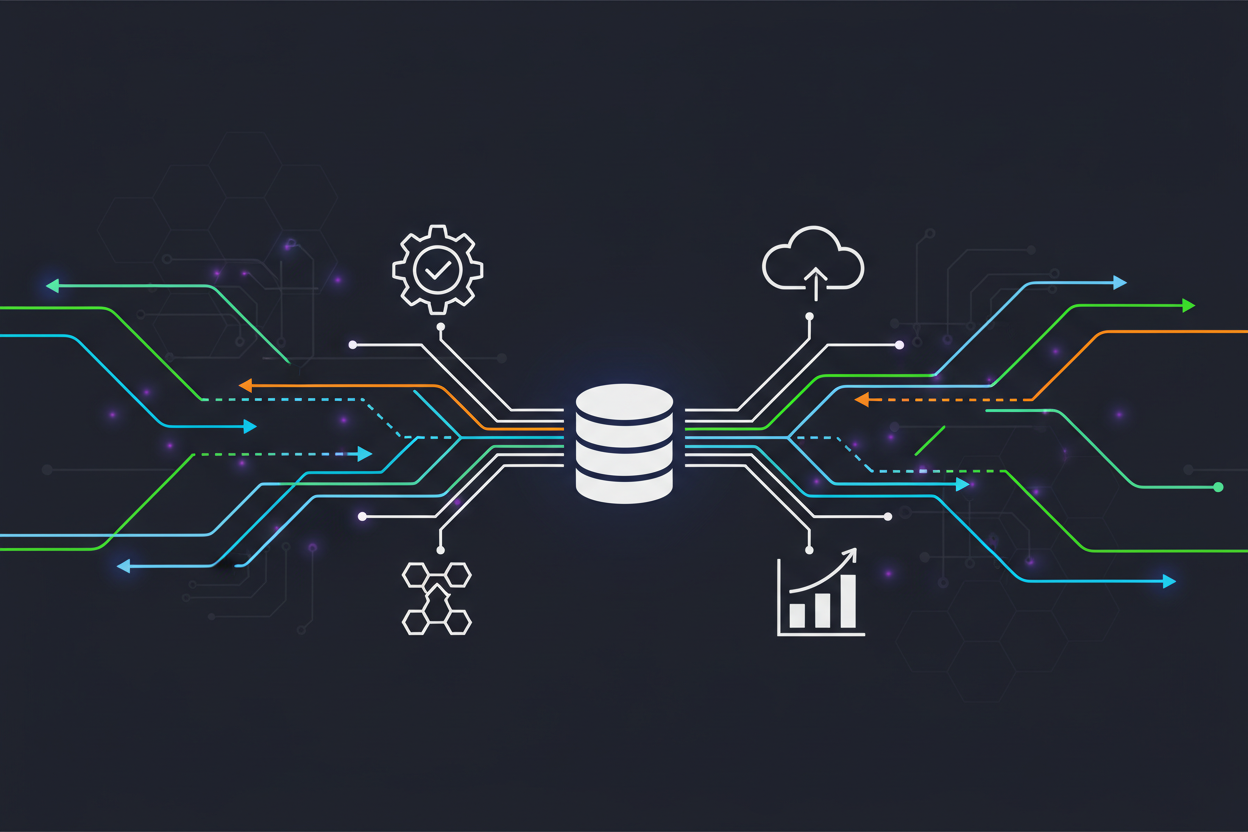
Your IT team achieves a high level of command over your information. Yet, this power comes with a significant risk. Direct manipulation can bypass essential business logic and validation rules.
In-depth knowledge of your enterprise resource planning structure is non-negotiable. You must understand the schema to succeed and avoid costly integrity issues.
Implement strict validation rules for every operation. This safeguards your information quality and prevents corruption.
Manual data entry is a major source of errors. You should prioritize automated strategies to maintain accuracy. Triggers can automatically update your central platform when changes occur elsewhere.
Your strategy must include regular testing. This ensures stability over time as your business evolves. Document every step of the process thoroughly.
Proper documentation maintains compliance and security across all your systems. It turns a technical project into a repeatable, scalable business asset.
Common Challenges in ERP Integration Projects
The road to a unified business platform is paved with predictable, yet costly, obstacles. A staggering 40% of these initiatives are derailed by common technical and organizational hurdles.
Data Migration and Legacy System Hurdles
Moving information from outdated software into a new central platform is a major pain point. Legacy applications often have incompatible formats and poor data quality.
You must plan for potential downtime during this critical phase. Ensuring business continuity is essential.
Managing Cost, Complexity, and Compliance
Budget overruns are frequent. The resources needed to maintain connections as your company grows can spiral.
You must also ensure your project adheres to all relevant regulations. Sensitive information exposure is a real risk during the linking process.
Managing organizational change is just as vital as the technical work. Teams need training and support to adopt new workflows.
Address these challenges by involving experienced professionals. They understand the unique complexities of your specific environment and can guide you based on solid foundational data management principles.
Best Practices for a Successful Integration Process
Your project’s success is determined long before the first line of code is written. A disciplined approach separates a smooth rollout from a costly failure.
You must prioritize thorough planning and team collaboration. Define clear business requirements first. This ensures your technical work aligns with real goals.
Planning, Testing, and Team Collaboration
Allocate 20-30% of your total budget to data cleansing and validation. Poor quality information is a primary cause of project delays. Investing upfront prevents cascading errors later.
Testing each connection for performance and accuracy is non-negotiable. Rigorous checks in a staging environment prevent costly downtime after launch. This safeguards your entire operation.
Involve your IT and business teams early. Cross-functional understanding is critical. Everyone must grasp the strategy and their role in the ongoing process.
| Project Phase | Core Best Practice | Key Success Metric |
|---|---|---|
| Planning | Define requirements & allocate cleansing budget | Clear scope document & clean data sets |
| Execution | Use version control & staged testing | Zero critical defects in test environment |
| Post-Launch | Regular monitoring & maintenance | System uptime >99% & user adoption rate |
Remember, this is an ongoing journey. Regular monitoring and updates keep your connections effective. Build on solid foundational data management principles for long-term stability.
Evaluating ERP Systems Based on Integration Needs
Vendor selection isn’t just about features—it’s about future-proofing your entire technology ecosystem. The wrong choice today creates roadblocks tomorrow. You must assess how a new platform connects with your existing tools.
Selecting a System Aligned with Your Tech Ecosystem
Look beyond the core software. Your evaluation must focus on prebuilt connectors and API support. This alignment lets you adopt new technologies seamlessly.
Use comparison tools to analyze different vendors side-by-side. Scrutinize how each solution addresses your specific requirements. Prioritize platforms that offer clear observability into information flows.
Expert Tips on Choosing Integrated Solutions
Ask vendors hard questions about their connectivity capabilities. Demand demonstrations of real-time data synchronization. Many customers find this due diligence protects their financial agility.
Ensure your chosen software can scale with your growth. A flexible solution prevents a complete overhaul in a few years. This strategic planning turns a major purchase into a lasting competitive advantage.
Future Trends and Innovations in ERP Integration
The integration landscape is shifting beneath our feet, driven by artificial intelligence and real-time analytics. Your current setup might work today, but will it adapt tomorrow? Forward-thinking organizations are already deploying intelligent tools that transform raw information into actionable insight.
Leveraging AI and Automation for Smarter Integrations
Business intelligence integrations now harness AI to automate collection and analysis. This means your ERP platform can proactively update workflows based on live data. Imagine reducing manual mapping tasks by 80%.
Your project teams gain deeper insights into customer behavior. Sales forecasts become incredibly accurate. This isn’t science fiction—it’s the next standard for operational excellence.
Staying Ahead in a Rapidly Evolving Digital Landscape
E-commerce sales are racing toward $9 trillion by 2027. Your strategy must support mobile-first experiences and personalization. Adopt platforms with built-in predictive analytics for demand planning.
Event-driven architectures ensure instant response to changing conditions. Security and governance will be paramount. You need a platform that grows with your ambition.
| Innovation Trend | Core Technology | Business Impact |
|---|---|---|
| Proactive Workflows | AI & Machine Learning | Automated decision-making, reduced manual effort |
| Real-Time Responsiveness | Event-Driven Architecture | Faster reaction to market changes, improved customer experience |
| Hyper-Personalization | Predictive Analytics | Increased sales conversion, tailored customer journeys |
| Enhanced Security | Advanced Governance Tools | Reduced risk, ensured compliance with data regulations |
Wrapping Up Your Integration Journey with Strategic Insights
Mastering the connection between your core platforms is not an endpoint—it’s the launchpad for continuous innovation. You now possess the strategic insights to turn isolated information into a unified asset.
This transformation powers your entire organization. Your central ERP software becomes a true growth engine, automating processes and delivering real-time visibility.
Remember, success hinges on meticulous planning and rigorous quality standards. Choose a solution that aligns with your unique technical landscape.
Explore AI and automation to keep performance at its peak. Your journey toward a fully connected enterprise starts now. Seamlessly integrate your critical platforms to secure your infrastructure and boost efficiency today.