

Your relational database is struggling to keep up, isn’t it? You’re trying to force every piece of data into a single model, and it’s creating bottlenecks that slow your entire system down.
This is where the concept of polyglot persistence changes the game. As Martin Fowler pointed out, you shouldn’t assume a relational approach is the only answer for a new strategic application.
Think about it—different kinds of information have different needs. A document store might be perfect for user profiles, while a key-value cache handles session data at lightning speed.
This strategic approach lets you match each data type with the ideal storage technology. It’s how companies like Netflix build architectures that scale to millions of requests effortlessly.
We’ll cut through the complexity and show you how to combine multiple databases without creating operational chaos. The right design accelerates delivery and protects your project from future scaling headaches.
Understanding the Evolution of Modern Data Storage
For decades, the world of data storage felt frozen in place. Relational systems were the only tool many architects considered.
Then, in 2006, Neal Ford introduced a revolutionary idea. He called it polyglot programming.
The core concept was simple. Different problems need different tools. This logic soon melted the ice around data, leading to what Martin Fowler termed the DatabaseThaw.
Origins of Polyglot Approaches in Software Architecture
This wasn’t just about code. The same thinking applied to how we store information. Scott Leberknight gave the approach its official name.
He recognized that strategic applications should not default to a single data model for every challenge. Why force a square peg into a round hole?
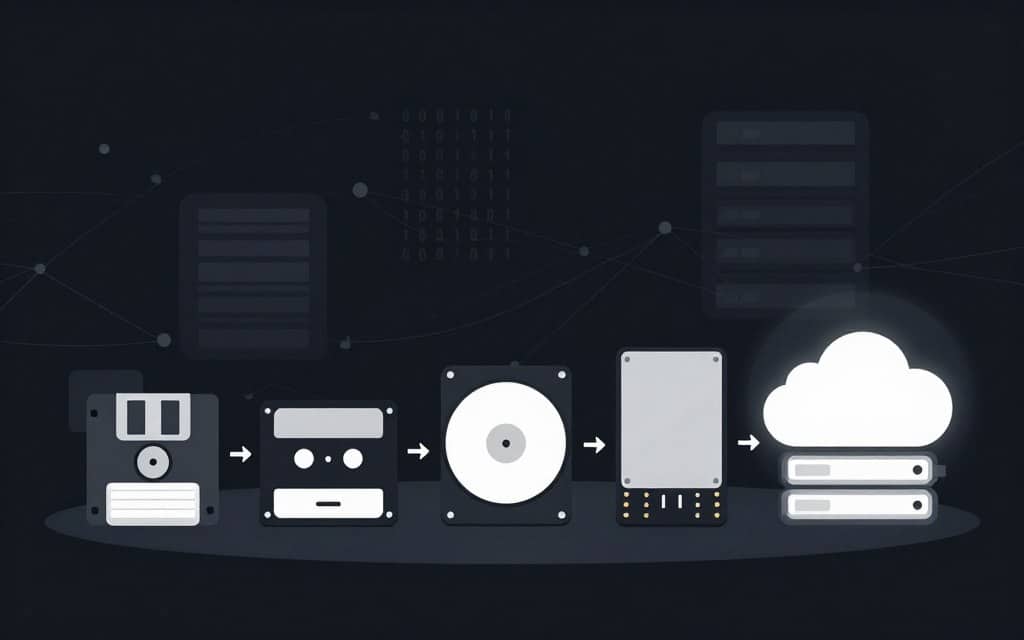
Complex software handles fundamentally different types of data. User profiles have little in common with social graph connections.
Transaction records demand different access patterns than cached session data. The old corporate hammer—the relational database—wasn’t always the right tool.
The Shift from Relational to Diverse Storage Systems
You’re now witnessing a fundamental rethinking. Architects first ask, “How will we use this data?” Then, they select the best technology.
The relational system isn’t dying. It’s finding its proper place in a diverse ecosystem.
It stands alongside document stores, key-value caches, and graph databases. This evolution mirrors a broader shift in software architecture itself.
We’re moving from monolithic systems to distributed applications. Each component uses the storage technology that excels at its specific task.
This strategic approach lets you build systems that are faster, more scalable, and inherently more flexible.
Innovative Strategies for polyglot persistence database design
Mapping your data usage patterns is the critical first step in a successful multi-database strategy. Your first decision isn’t which technologies to use. It’s understanding what you need to accomplish with each type of information in your application.
Start by identifying clear service boundaries within your architecture. These boundaries become natural wrapping points for specific storage solutions. This approach prevents complexity from leaking across your entire system.

Different data has vastly different needs. Match the technology to the access pattern for peak performance.
This table shows how to align common patterns with the ideal technology:
| Data Access Pattern | Ideal Technology | Common Use Cases |
|---|---|---|
| Retrieve entire objects by ID | Document Store | User profiles, product catalogs |
| Traverse complex relationships | Graph Database | Social networks, fraud detection |
| Ultra-fast simple lookups | Key-Value Store | Session management, caching |
| Transactional consistency & reporting | Relational Database | Financial records, complex queries |
Design your system so each service owns its data store. Never share a single database across service boundaries. Shared data stores create tight coupling that destroys your ability to evolve components independently.
This strategy is a natural partner for microservices architecture. It turns your persistence layer into a set of focused, high-performance tools. The result is a system that scales effortlessly and adapts to change.
Real-World Applications and Case Studies in Data Handling
The proof of any architectural approach lies in its battlefield performance—how it handles millions of users daily. Real companies face real scaling challenges every hour.
Their solutions demonstrate what works when theory meets enterprise demands. Let’s examine two compelling examples.
Case Study: The Guardian’s Transition to NoSQL
The Guardian’s engineering team was drowning in unnecessary complexity. Their content management system simply needed to retrieve page elements by ID.
Yet they struggled with a relational system that added zero value. The switch to MongoDB delivered immediate productivity gains.
Their team stopped fighting constraints and started shipping features. This migration happened gradually over a year on existing code.
Inside Netflix: Orchestrating Multi-Database Systems
Netflix runs one of the world’s most sophisticated implementations. Those seconds when you scroll for content involve four different technologies working together.
A graph database maps viewing relationships—what people like you enjoyed. A document store holds complete viewing history as rich JSON objects.
Session data lives in a key-value cache for microsecond response times. Billing information stays in a relational system for transaction guarantees.
These examples prove that matching storage to data semantics delivers measurable improvements in development speed and system performance.
Navigating Complexity and Performance Challenges
Managing multiple data storage technologies introduces undeniable complexity—but pretending it doesn’t exist guarantees failure. Your team faces real operational hurdles that require strategic planning.
Balancing Consistency with Scalability
Each storage technology brings different consistency guarantees. Relational systems offer ACID transactions, while many NoSQL options provide eventual consistency.
You must choose between consistency, availability, and partition tolerance daily. The CAP theorem becomes your operational reality.
| Consistency Model | Best For | Performance Impact |
|---|---|---|
| Strong Consistency | Financial transactions, critical operations | Higher latency, lower throughput |
| Eventual Consistency | Social feeds, recommendation engines | Lower latency, higher scalability |
| Read-Your-Writes | User sessions, personal data | Balanced performance profile |
Distributed transactions across multiple systems become problematic fast. You’ll need patterns like sagas or event sourcing to maintain data integrity.
Overcoming Integration Barriers in Diverse Data Models
Integration challenges hit hard when services use different data models. Your user service stores documents while your social service uses graphs.
Joining data across technologies requires API composition or materialized views. Traditional database joins simply won’t work anymore.
Monitoring gets exponentially harder too. You’re tracking metrics across heterogeneous technologies with different dashboards.
The solution? Start with strategic projects where benefits clearly outweigh complexity costs. Build expertise gradually before rolling this approach across your entire portfolio.
Bringing It All Together for Strategic Enterprise Success
Enterprise success with multiple data storage technologies requires careful strategic alignment, not blanket adoption. You need to match the right solution to each specific data challenge in your applications.
Focus this approach on strategic projects where the benefits clearly outweigh the complexity. Utility applications with basic needs should stick with proven relational solutions.
Start building expertise now through small proof-of-concept projects. Assign team members to explore different storage technologies without risking core business operations.
The teams who develop this expertise today will gain significant competitive advantage as polyglot persistence becomes standard enterprise practice. This evolution is happening—be ready to lead it.