Database Triggers Explained with Examples

database triggers explained with examples

Have you ever wondered if a small piece of code can enforce rules and automate tasks right where your data lives? At its core, a trigger is a stored routine that runs in direct response to changes on a table—INSERT, UPDATE, DELETE, or TRUNCATE. You use it to enforce rules, keep audit logs, or update … Read more

Primary Key vs Surrogate Key Differences

primary key vs surrogate key differences

Have you ever wondered which identifier will save you time, avoid refactors, and keep your systems fast? This short guide helps you see why a key is the unique identifier that ties each row to the database and supports data integrity and query performance. You’ll learn when a surrogate key—a system-generated id like a GUID—beats … Read more

Database Normalization vs Denormalization Explained

database normalization vs denormalization

Which approach will make your data faster and more reliable — and why does it matter to you right now? You need a clear, plain-English guide that cuts through theory. This intro shows the basic trade-offs so you can decide quickly. Normalization organizes data into related tables to cut duplicates and protect data integrity. That … Read more

Purpose of Data Dictionary in DBMS

purpose of data dictionary in DBMS

Have you ever been asked, “What does this metric mean and where did it come from?”—and felt unsure how to answer? This guide promises a clear gain: learn a practical way to align teams and systems so you can answer that question with confidence each week. Expect faster onboarding, fewer disputes, and higher trust in … Read more

OLTP vs OLAP: Key Differences Explained

difference between OLTP and OLAP

Which system runs your checkout in milliseconds while another mines months of history for business insight? You use one system to record every online transaction and keep accounts accurate in real time. You use the other to analyze aggregated data and find trends that guide strategy. Quick takeaway: one focuses on fast, write-first processing with … Read more

File-Based vs Server-Based Databases Compared

file-based vs server-based databases

Wondering which approach fits your next project—simple files on disk or a full database running on a server? In plain terms, a file holds raw content in a folder while a database adds structure, rules, and tools to manage data at scale. File systems like NTFS suit lightweight storage tasks. A DBMS such as MySQL … Read more

Database Transaction Isolation Levels Guide

database transaction isolation levels

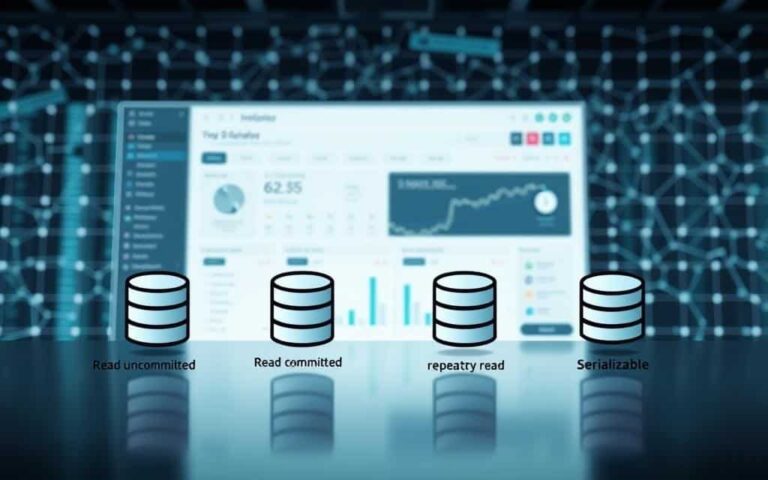
Have you ever wondered why two apps reading the same data can show different results at the same time? This guide gives you a clear, plain-English tour of how systems balance concurrency and correctness. You’ll learn the common names for the options and why modern systems often pick one by default. We explain key ideas—like … Read more

Database Concurrency Control Methods Explained

database concurrency control methods

Have you ever wondered how many users can safely update the same data at once without breaking anything? This guide shows how modern systems let many operations run at the same time while keeping your data correct. You’ll get clear definitions of a transaction, isolation, and serializability so you can judge safety versus performance. Transactions … Read more

What Is a Transaction Log in Databases?

transaction log in databases

Have you ever wondered how a SQL Server brings data back after a crash—fast and intact? The transaction log in databases is the answer: a sequential record that captures every change so the server can undo or replay work during recovery. Think of this file as the system’s black box. It stores entries for each … Read more

File Organization in DBMS Explained

file organization in DBMS

Have you ever wondered why some queries feel instant while others crawl for minutes? This short guide shows how record layout on disk controls speed, cost, and scalability. You’ll see how different layouts map records to blocks and buckets, and how that affects selection, insertion, deletion, and updates. Understanding this link between the table view … Read more

Types of Database Users and Their Roles

types of database users and roles

Have you ever wondered who really keeps a database running when crisis hits? Knowing who interacts with data helps you design better access, limit risk, and speed recovery. This piece maps the main groups that touch a database and what they do each day. Some people write code, others tune the system, and many simply … Read more

Role of Indexes in Databases Explained

role of indexes in databases

Have you ever wondered why some searches return instantly while others crawl for minutes? This section gives a clear, practical view. An index is a small data structure that points your database to the right rows so queries avoid full table scans. That shift often moves work from O(N) to O(log N), which cuts the … Read more

OLAP Database Examples and How They Work

OLAP database examples

Have you ever wondered how teams get sub-second answers on fresh data—without waiting for slow batch jobs? This article guides you through online analytical processing in clear, practical terms. You’ll see how modern systems pair columnar storage with massive parallel execution to make analytical queries fly. We explain why low-latency architectures, streaming or CDC ingestion, … Read more

Schema vs Subschema: Key Differences

key differences between schema and subschema

Have you ever wondered which design choice makes your database faster, safer, or easier to manage? At its core, a schema is the blueprint that defines the tables, columns, relationships, and integrity rules that shape a database. It provides the high-level structure and a clear description of how data fits together and how systems must … Read more

Network Database Model: Key Use Cases

network database model use cases

Can a structure built around connections change how your team handles complex data? This introduction answers that question and points you to practical decisions. The network approach treats entities as nodes and links as edges—think of people, devices, or records tied by clear relationships. It borrows from graph theory and favors queries that follow connections … Read more

Hierarchical Database Model Examples and Uses

hierarchical database model examples

Can a simple tree shape help your business tame messy data and speed up decisions? This introduction gives you a plain-English tour of a classic model that links records with clear parent-child paths. You’ll see how a root-based structure makes navigation predictable and governance easier across your organization. We’ll highlight real applications—from file catalogs and … Read more

Flat File Database: Pros and Cons

flat file database advantages and disadvantages

Wondering whether a flat file is enough for your current data needs—or if you should plan for something more robust? This question matters when your business must balance quick setup with long-term control. A flat file database keeps one record per line as plain text, with fields split by commas or tabs. That simplicity means … Read more

Benefits of Object-Oriented Databases Explained

benefits of object-oriented databases

Can one change in your data model make apps simpler and faster? That question matters when you balance modern applications with existing systems. Object-oriented databases store information as self-contained objects that bundle attributes and methods. Each object has a unique identifier, so retrieval matches how developers work in code. This approach can speed complex queries … Read more

Understanding What Is Database Research

what is database research

Database research is key in our digital age. It’s about studying organized digital collections of info. This includes articles, books, and multimedia. It helps us find data quickly, which is vital in many areas like healthcare and tech. Starting with database research basics can feel daunting. But learning about database design and data retrieval boosts … Read more

Unveiling Database Engineering: A Quick Guide

what is database engineering

Welcome to the exciting world of database engineering! If you’re curious about how data is organized and used, you’re in the right spot. This guide introduces you to database engineering, highlighting its key role in today’s data-driven world. Database engineering is at the heart of data management technology. It supports many business operations. Industries like … Read more

Discover Periodical Databases: Your Research Ally

what is a periodical database

Periodical databases are key for students, researchers, and professionals. They offer the latest information in many fields. These databases help you succeed in your studies and research. Many students start their research with course materials. But, only a few find them good enough for deeper studies. This shows how important periodical databases are for expanding … Read more